
We were disappointed that no new GPUs were announced this year, and even the desktop CPU lineups hardly saw any new arrivals. Intel skipped announcing the Arrow Lake Refresh, NVIDIA also kept silent in terms of GPU announcements, while AMD released a single CPU for the AM5 platform. CES 2026 was largely focused on AI, but thankfully, many vendors still introduced consumer-oriented products that we think you will find interesting.
We visited as many booths as possible and tried to get our hands on these products. We have already covered them extensively in the past few days. And in case you were tired of the “AI” spam in presentations, here are some of the best consumer tech products that were worth checking out.
Best Processor: Intel Panther Lake (Core Ultra Series 3)
We are finally seeing Intel bringing a strong and competitive integrated graphics solution to its CPU lineup. While Panther Lake is exclusively for the mobile platform, it is way, way better than whatever has been released by the company yet. Panther Lake isn’t something that just focuses on offering improved productivity performance, but thanks to the new Xe3 architecture, it is now able to outperform powerful integrated graphics like the Radeon 890M with ease.
Panther Lake, aka Core Ultra Series 3, is the first-ever 18A-based product that will now power the upcoming laptop lineups. Built with the latest NPU5 and designed for high efficiency, you can expect improvements in almost every area. Intel promised a huge performance uplift in MT performance over its competitors from the Strix Point family, and it further shows its dominance in gaming benchmarks, where we were able to test the flagship Arc B390 iGPU in gaming that comes close to Radeon 8060S in some scenarios.
Runner Up: AMD Ryzen 7 9850X3D
Even though not much has changed, the AMD Ryzen 7 9850X3D raises the benchmark further by pushing peak gaming performance even higher. It’s a small refresh of the existing Ryzen 7 9800X3D, but brings a 400 MHz higher frequency to deliver some noticeable performance uplift. The 9850X3D is expected to continue the legacy of the Ryzen 9800X3D, but we are also waiting for AMD to showcase the Ryzen 9 9950X3D2, which is the first-ever dual 3D V-Cache equipped chip.
Best Graphics: Arc B390
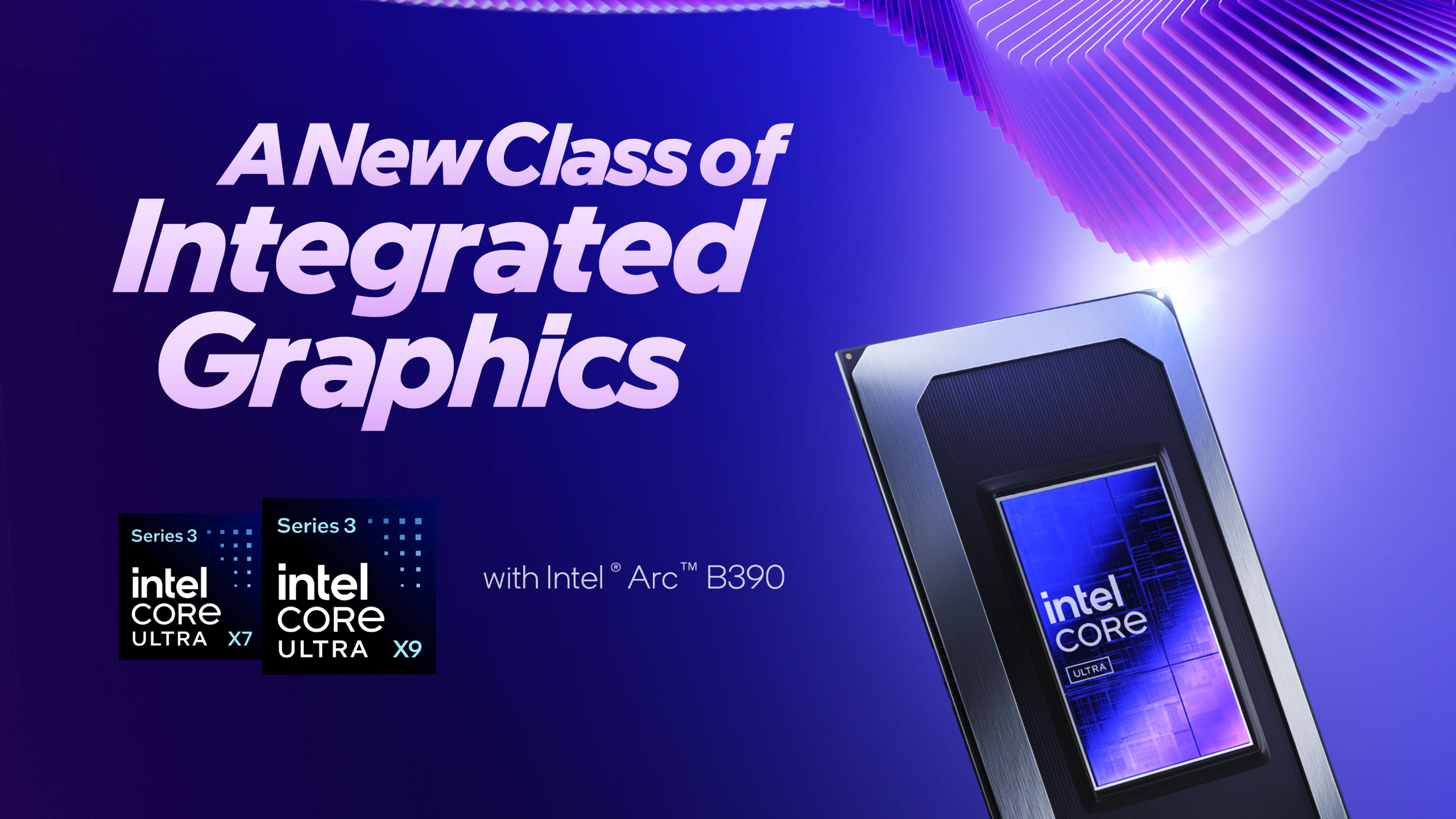
As I said earlier, the Arc B390 takes the lead, and it’s not just because it’s the most powerful iGPU from the company yet, but also because it’s powerful enough to play modern titles. You surely cannot expect it to compete with current-gen discrete GPUs, but it’s quite comparable to GeForce RTX 4050. In most triple-A titles, the Arc B390 can deliver consistent 60 FPS on high settings or even more. Intel claims the Arc B390 can deliver over 80% performance boost vs the Radeon 890M on average with native rendering, and thankfully, several SKUs bring it on board.
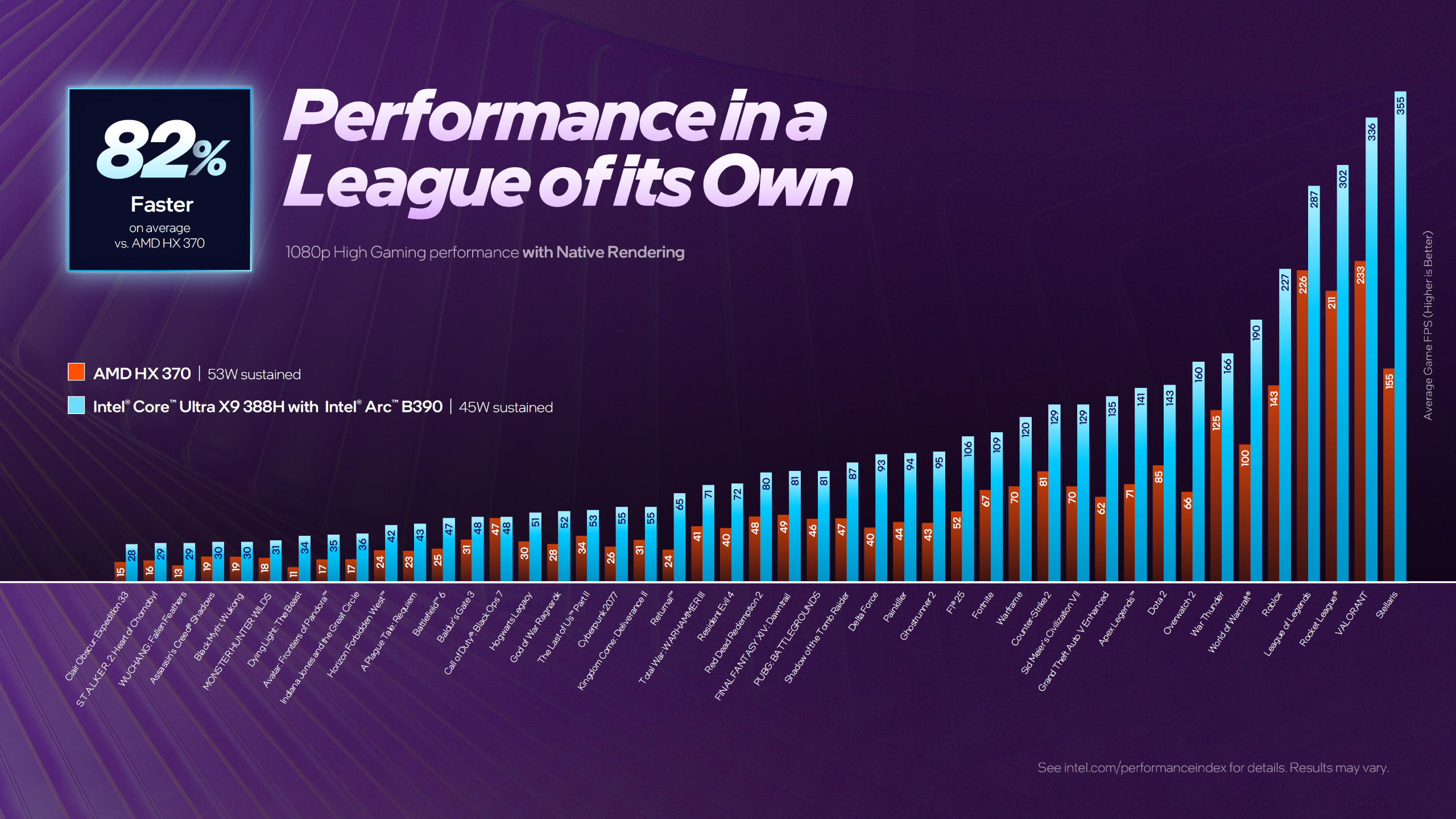
The Xe3 architecture is doing a phenomenal job, and while other budget Panther Lake SKUs are mostly equipped with four Xe3 cores, they will still offer a decent experience in less-intensive titles. Keep in mind that there were no official discrete GPU launches at the event, which is why the Arc B390 is the only thing that brings something promising.
Runner Up: MSI GeForce RTX 5090 Lightning Z
This 40 VRM power phase monster caught our attention at the event since it’s the only RTX 5090 that can unlock the path for a whopping 2500W through XOC BIOS, made specially for enthusiast overclockers. From its extremely premium PCB design to aesthetics and cooling solution, nothing comes close to the MSI RTX 5090 Lightning Z.
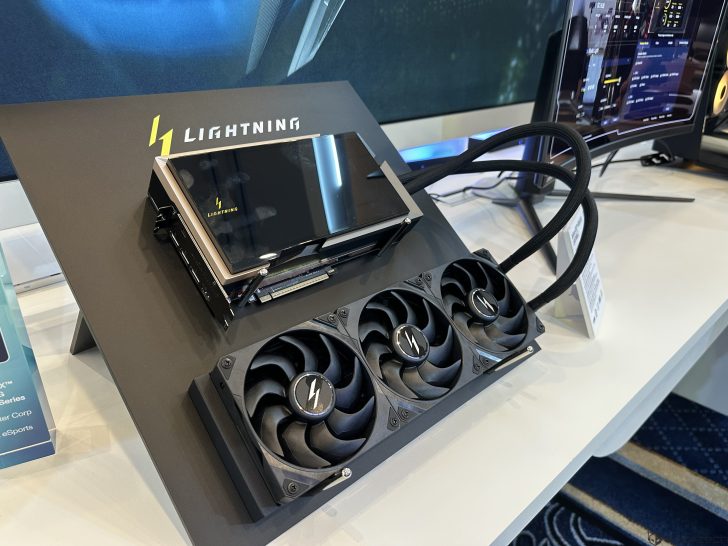
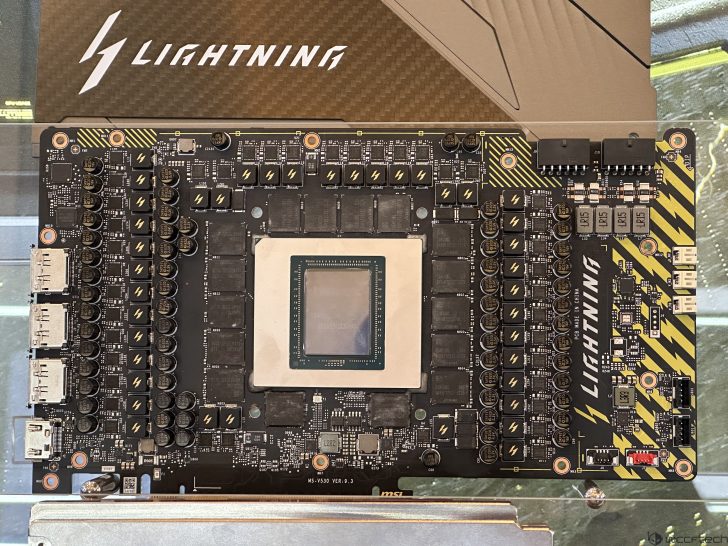
It’s not just another AIO RTX 5090, but it’s the first RTX 5090 to reach a sustained 1000W to get you the best possible performance. The cooler in itself is remarkable, built using 100% copper, and its shroud uses a large 8-inch display. There will only exist 1,300 such units, and you can easily expect a significantly higher price tag than the currently available premium RTX 5090 editions.
Best Motherboard: MSI MEG X870E Unify-X MAX
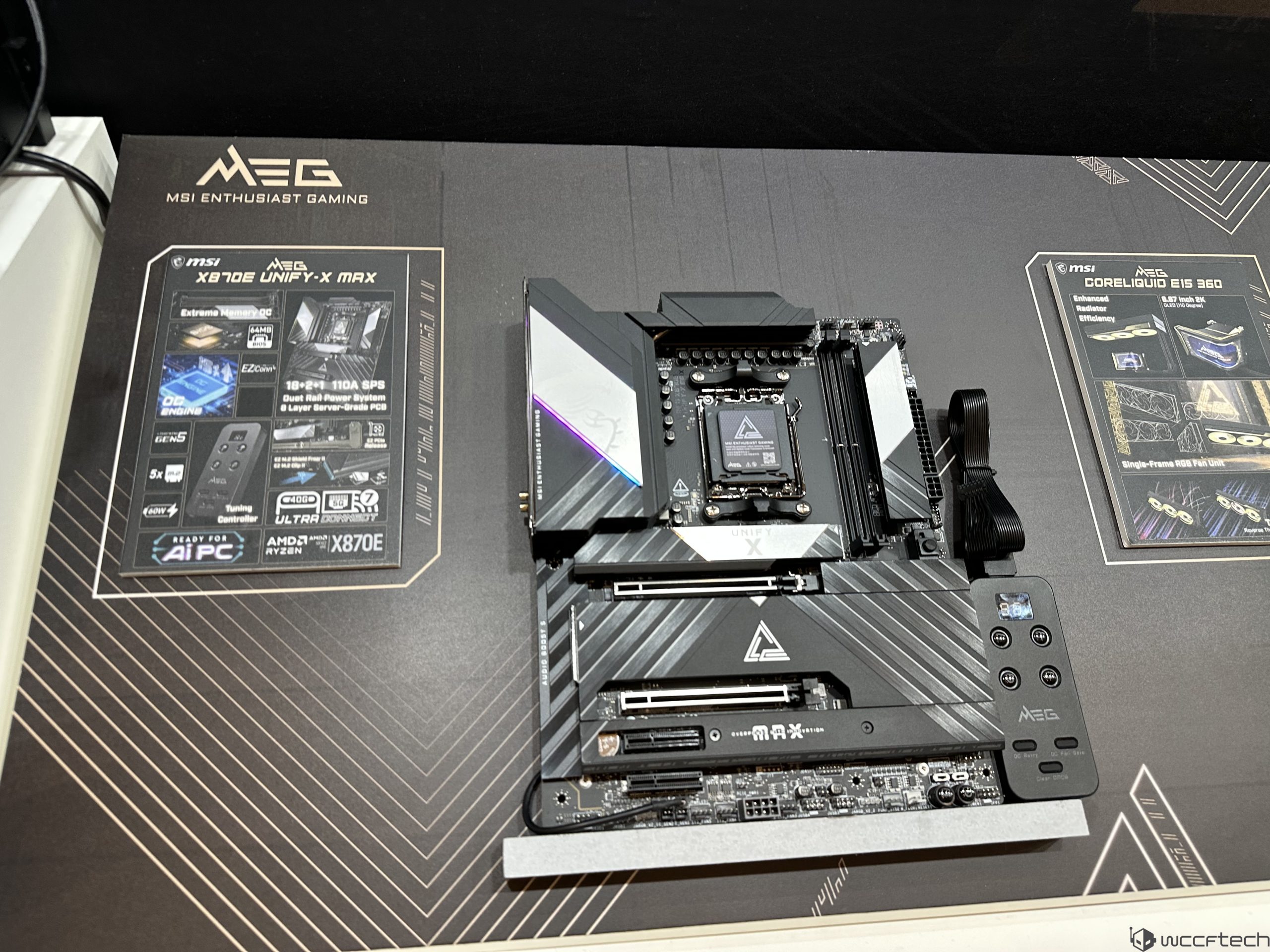
Several decent “refreshed” 800-series motherboards were launched at CES, but the MEG X870E Unify-X MAX is an absolute powerhouse that has an extraordinary design for enthusiast overclockers. It isn’t your regular X870E motherboard, but a well-built and utility-equipped board that brings overwhelming onboard features for testing your hardware limits. An 18+2+1 power phase design with 110A SPS is there to take care of your overclocking needs, and it brings just 2x DIMM slots with support of up to 128 GB DDR5 memory, focusing more on achieving those high transfer speeds rather than on increasing the capacity. We expect it to soon appear in world record leaderboards, and with Ryzen 7 9850X3D releasing soon, expect enthusiasts to break the overclocking limits.
Runner Up: ASUS NEO Series
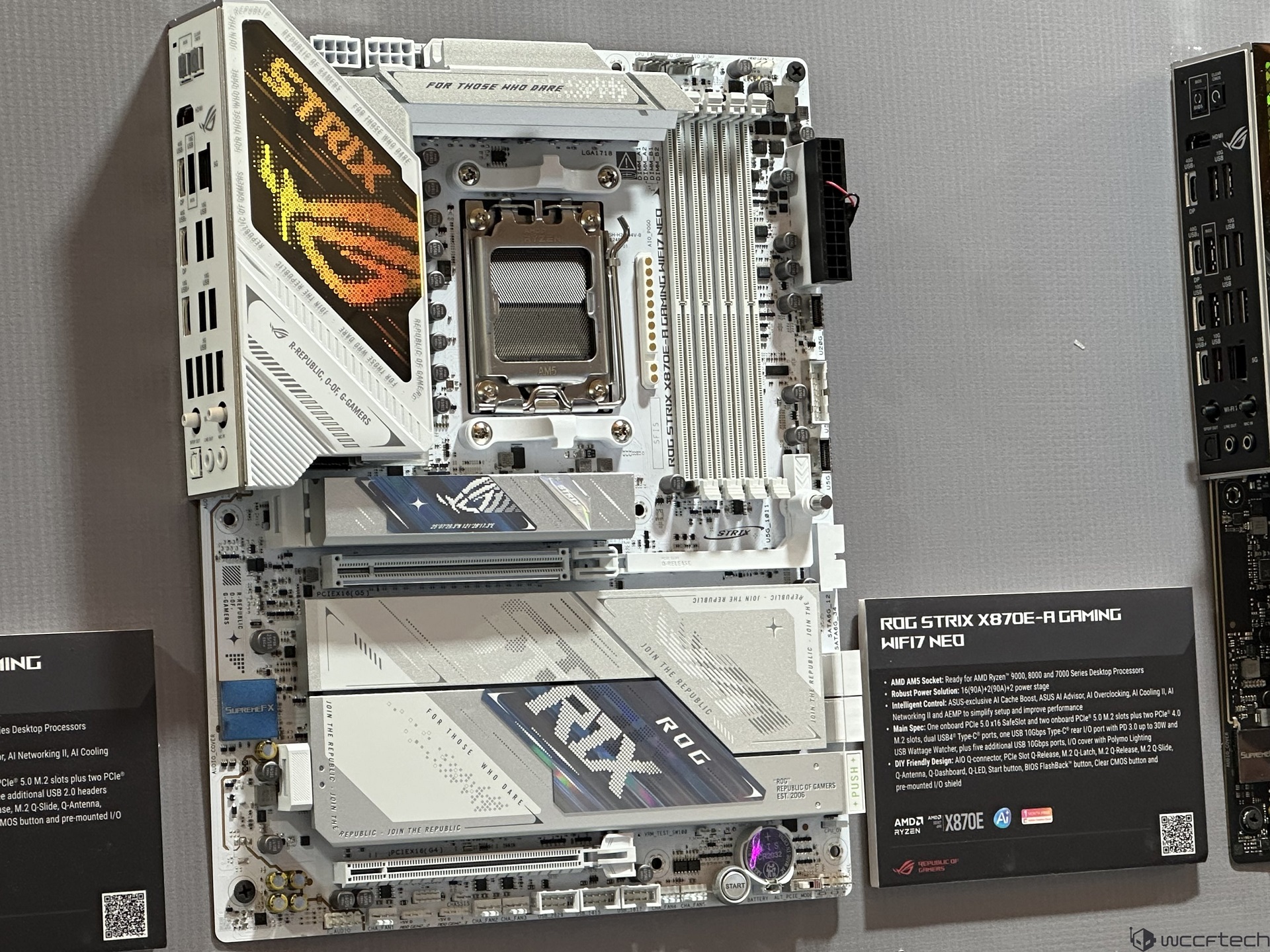
The ASUS 800-series NEO motherboards were one of our favorites. They didn’t bring any major upgrades over the non-NEO variants, but the minor upgrades on these actually make a difference. These motherboards bring an optimized PCIe lane layout to allow easier upgrades, and here we are seeing that some models allow using the PCIe 5.0 x16 slot in X16 mode and two PCIe 5.0 M.2 connectors simultaneously.
The X870E variants had an additional AIO Q-Connector, which totally eliminates the wiring processor for compatible AIOs. Even though the ROG Strix LC IV series coolers are the only ones that can benefit from this new interface, we expect more such coolers to arrive this year.
Best Pre-Built PCs: Digital Storm Vector
We didn’t see a lot of pre-built systems, but thankfully, there were a few vendors who went out of the conventional way in designing their newer systems. Digital Storm’s Vector pre-built system was probably the best one, bringing a high-end configuration into a very compact chassis. The Vector PC is probably the smallest small form-factor PC that packs in a full Blackwell GeForce RTX GPU up to an RTX PRO 6000 paired with flagship AMD or Intel processors such as Ryzen 9 9950X or Core Ultra 9 285K.
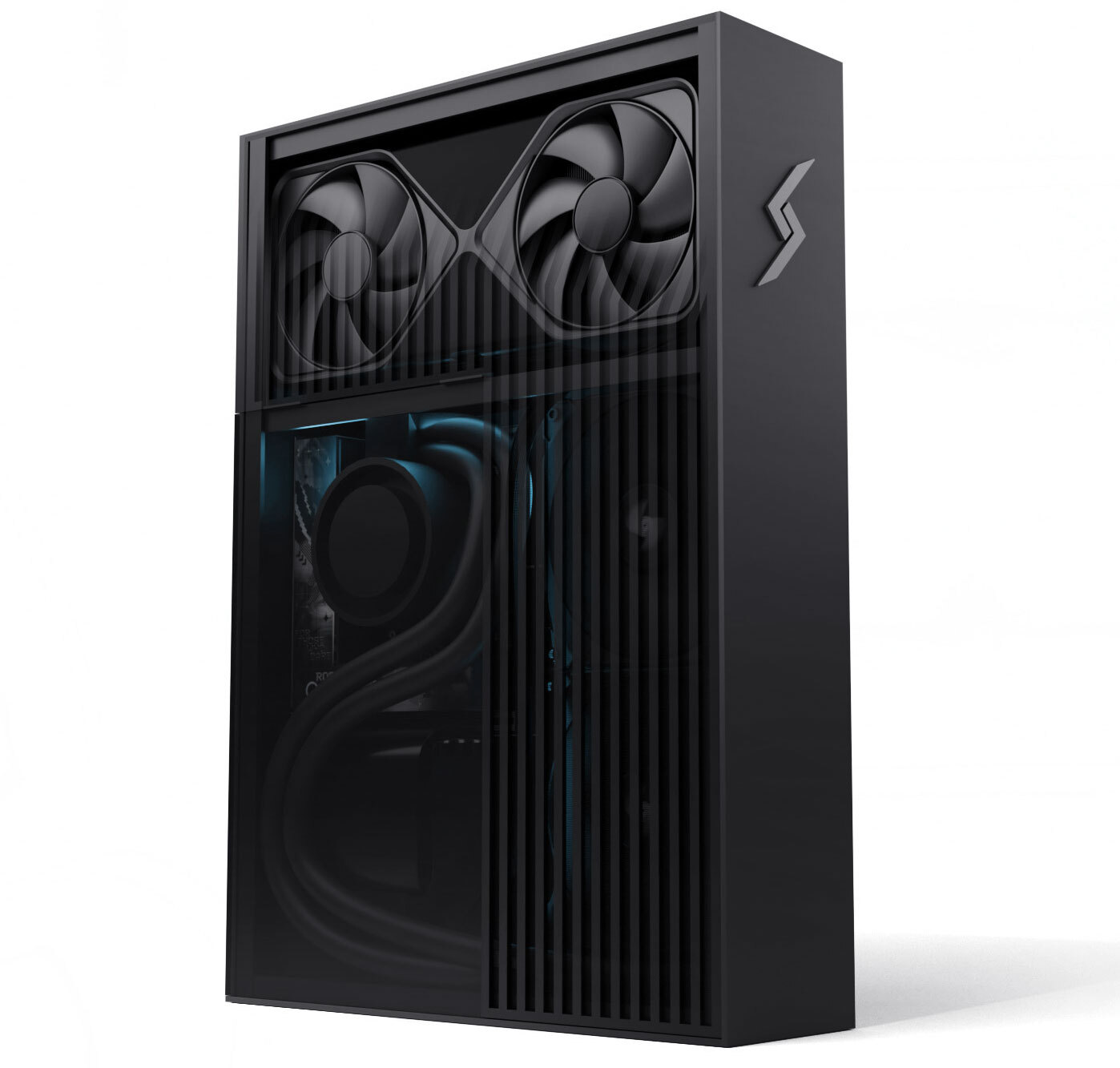
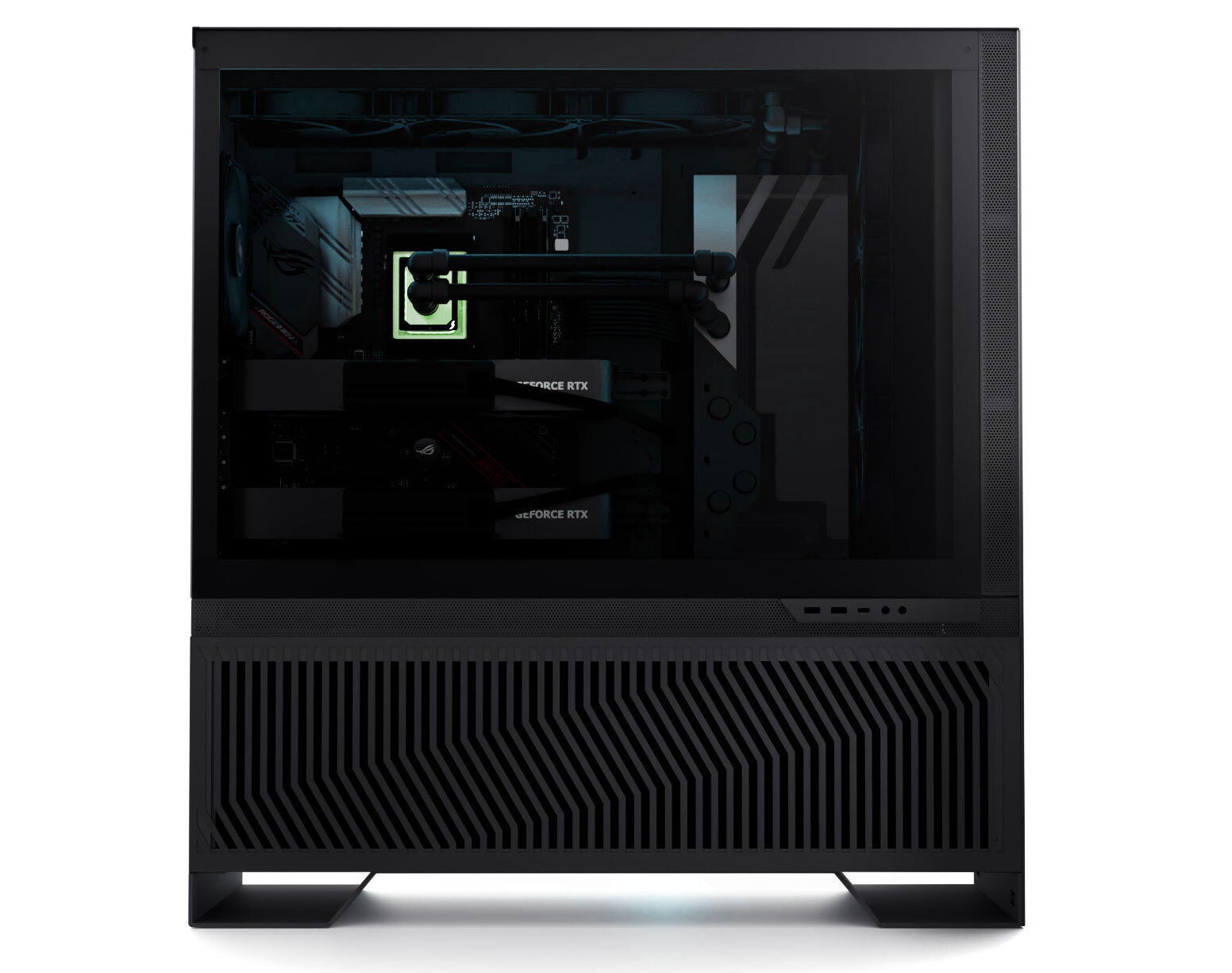
It’s surprising how the company managed these high-end parts inside a 99 mm wide chassis while also deploying an AIO. But there was another system that, although it didn’t have the same approach, had a primary goal was to maximize performance. The Aventum 5 gaming desktop didn’t use a traditional AIO, but went with a custom liquid loop for CPU cooling, and allows a dual-GPU setup with up to RTX PRO 6000.
Runner Up: ASUS ROG G1000
Of course, ASUS was also there with its new flagship gaming desktop called ROG G1000, which brought a Ryzen 9 9950X3D and GeForce RTX 5090 combo. It’s big, beautiful, and has ROG AniME Holo technology, which is breathtaking. While there are plenty of system integrators who are offering flagship hardware, the ROG G1000 moves beyond the internal hardware and focuses a lot on functionality, aesthetics, and convenience.
Best Mini PC: GMKtec EVO-T2
We love mini PCs, and we have reviewed dozens of those here. GMKtech has been steadily expanding its lineup and now has a wide range of options in its catalog. Since Intel Core Ultra Series 3 debuted at the event, we saw many manufacturers adopting its chips for their next-gen products, including GMKtech, which unveiled its EVO-T2 mini PC, boasting up to Core Ultra X9 388H. Delivering up to 180 TOPS of AI performance, it’s a compact powerhouse that can easily carry out intensive AI workloads but isn’t limited to it.
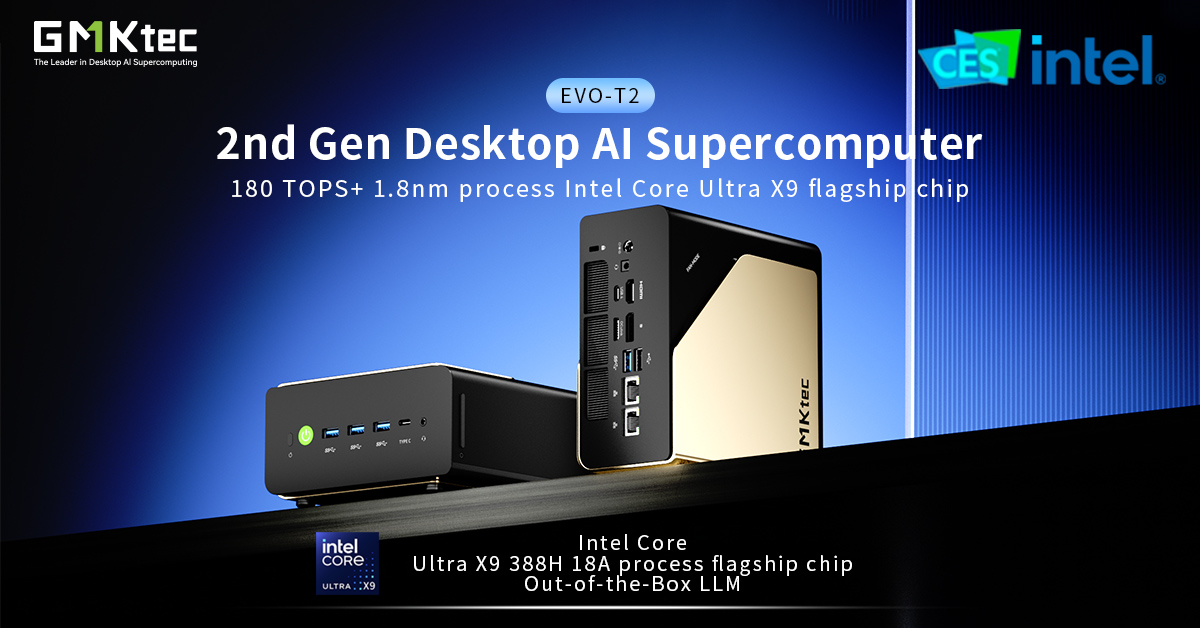
With an excellent 16-core configuration and a powerful Arc B390 iGPU, it’s ready to take on intensive CPU-oriented tasks as well as modern gaming workloads. All this happens inside a small box that is way smaller than modern-gen consoles. Not to mention, it’s one of the best mini PCs when it comes to connectivity, bringing the latest WiFi 7, dual high-bandwidth LAN ports, USB4 with 100W power delivery, and an OCulink port for adding an external GPU.
Runner Up: ASRock NUC Ultra 300 BOX
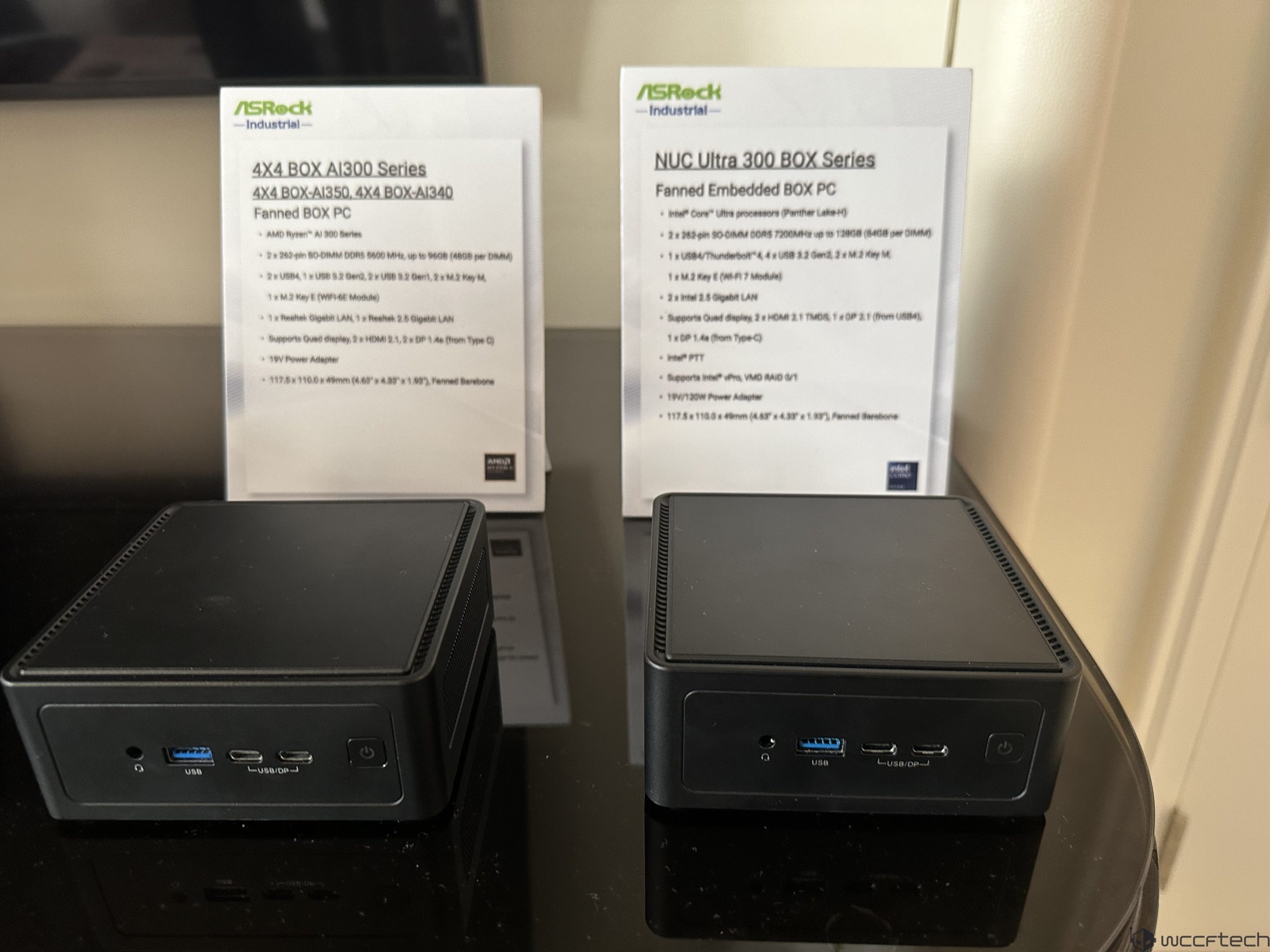
We have a competitor for GMKtech’s mini PC from ASRock, which also offers incredibly good configurations, featuring the latest Panther Lake CPUs and a memory capacity of up to 128 GB. This one is the NUC Ultra 300 BOX, but ASRock also launched another variant, featuring the Ryzen AI 300 series processors. Both offer decent connectivity options, but the NUC Ultra 300 holds a slight edge with a more well-rounded feature set.
Best Laptop: ASUS ProArt Series
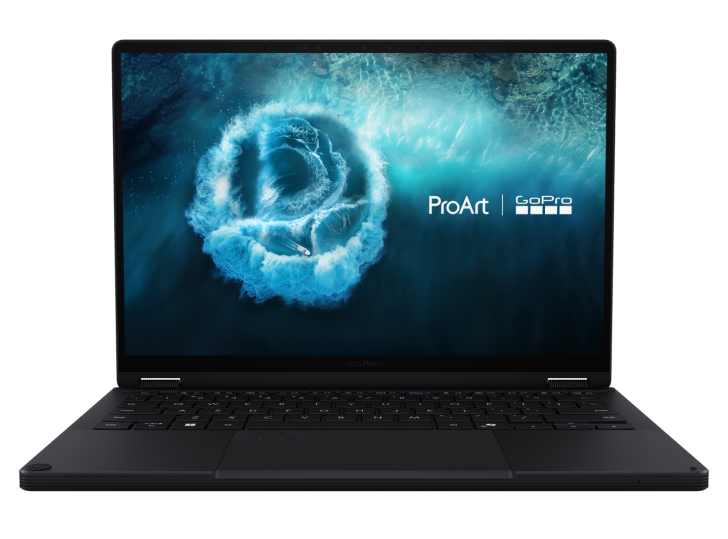
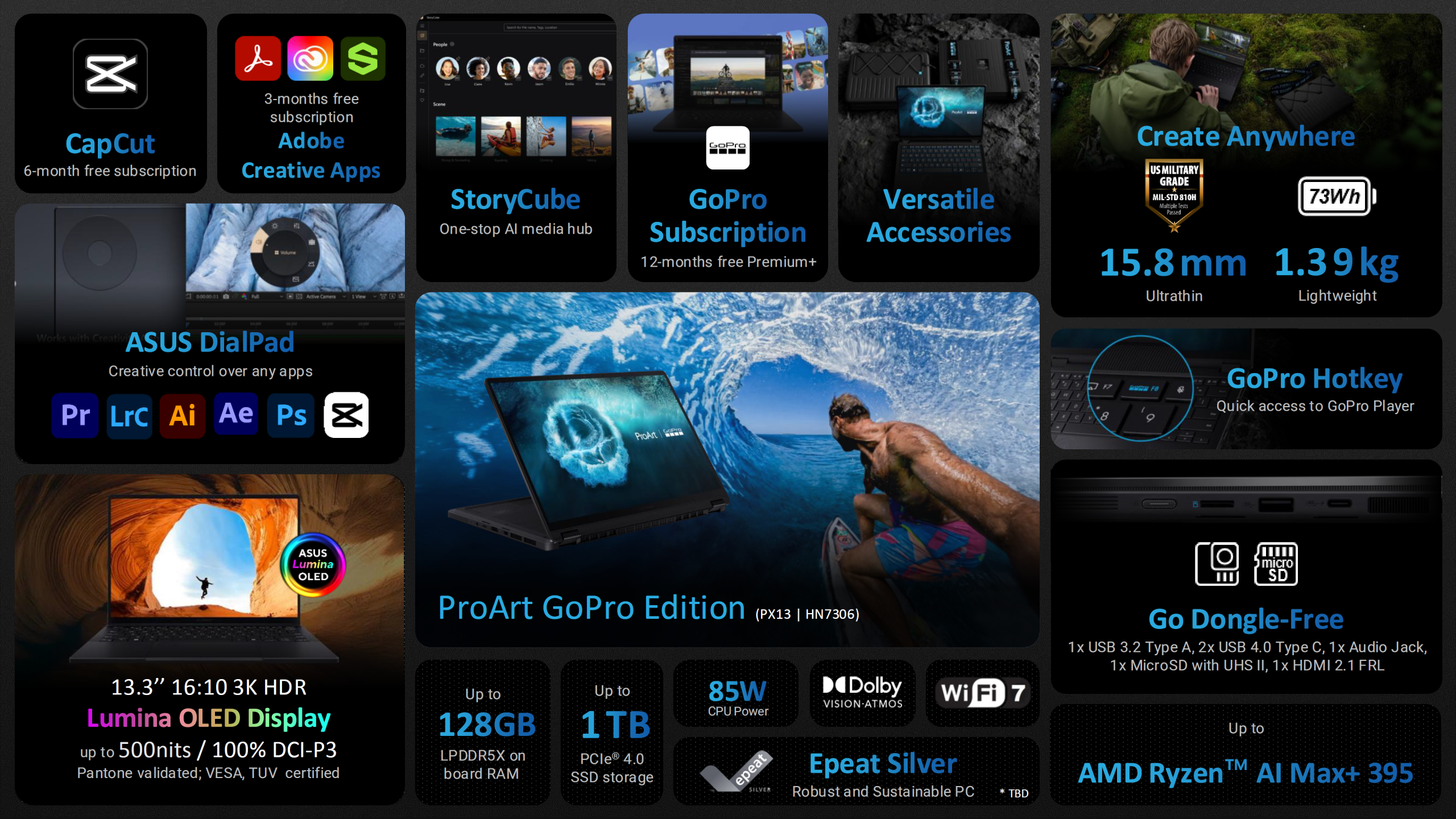
The ASUS ProArt laptop got a huge upgrade, and while it was already a beast with the Strix Point APUs, with the deployment of the flagship Strix Halo chip, the new ProArt PX13 and ProArt PX13 GoPro editions brought a major performance boost. Technically, both are identical in hardware except for one or two changes, including the aesthetics, which is GoPro-inspired on the latter. Equipped with a 16-core/32-thread Ryzen AI Max+ 395 processor, it not only delivers terrific compute performance but also nails it with the Radeon 8060S iGPU that can compete with the RTX 4060 laptop GPU in gaming benchmarks.
All this while maintaining a small form-factor, measuring just 0.62″ to 0.70″ in thickness and bringing a small 13.3″ screen size that makes it easier to carry around. The laptop boasts a solid 3K OLED panel that brings excellent contrast while maintaining a solid 400 nits of brightness. With up to 128 GB LPDDR5X memory capacity, the new ProArt series won’t lag in any gaming or non-gaming workloads, making both options a solid choice for gamers, content creators, and professionals.
Runner Up: Dell XPS
When it comes to raw performance and powerful integrated graphics, we haven’t been as impressed as we were by the Intel Panther Lake at the event, which is why the new Dell XPS series cannot be ignored. Both the XPS 16 and XPS 14 laptops now bring a variety of configurations, powered by power-efficient as well as high-performance Core Ultra series 3 processors. Apart from a solid configuration, these laptops offer both IPS and OLED displays with resolutions of up to 3.2K and refresh rates of up to 120 Hz, providing a fluid gaming experience.
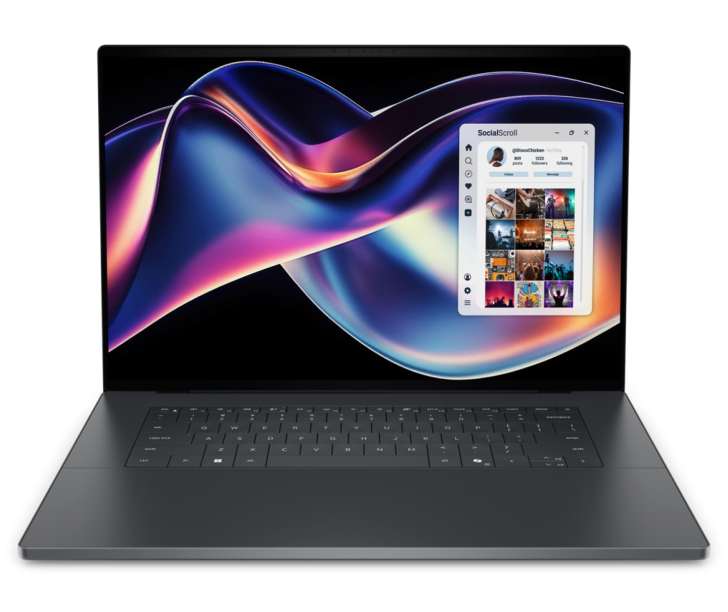
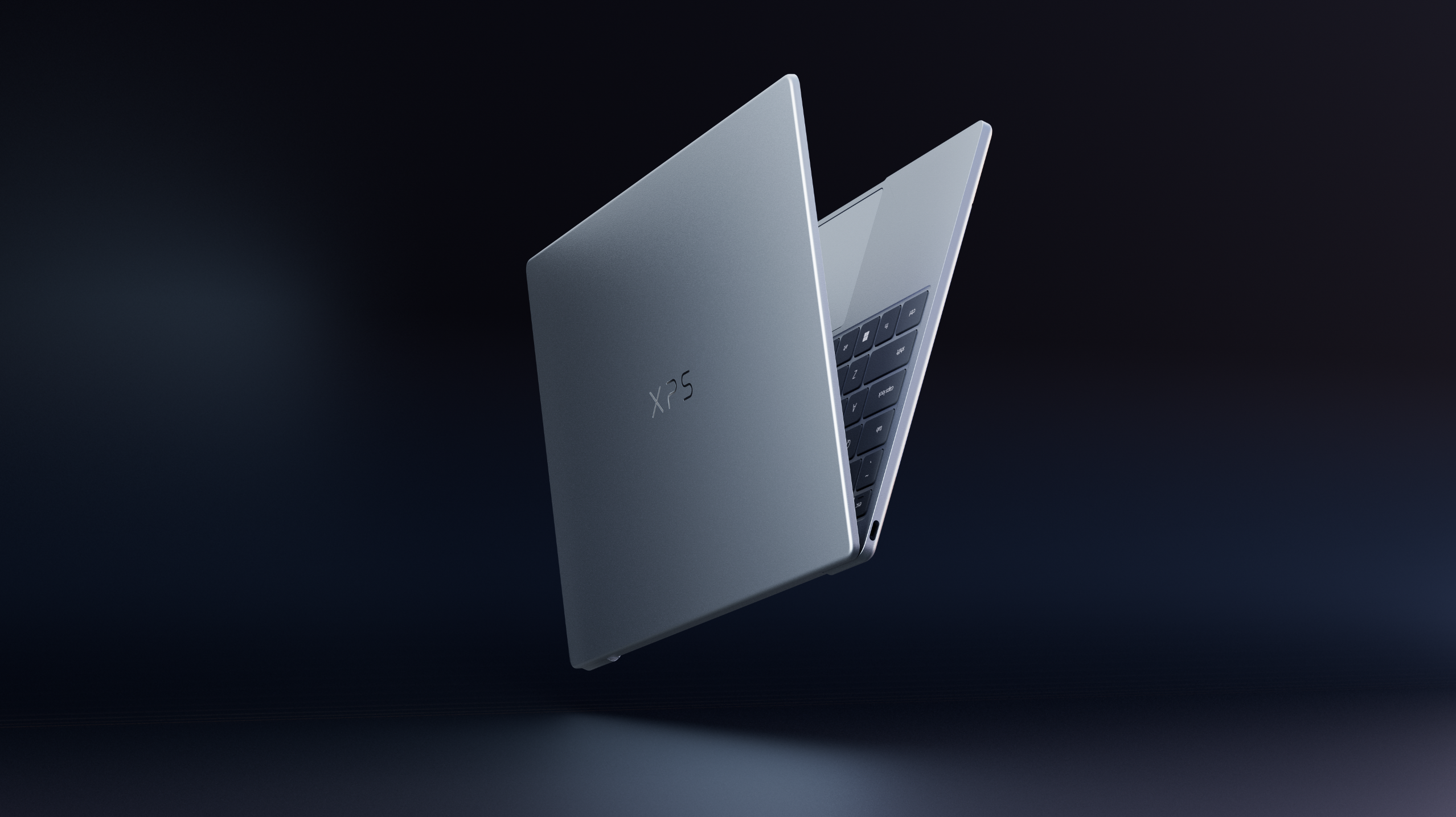
It’s amazing to see that Dell has worked wonderfully on other aspects as well, such as powerful speakers, 4K HDR webcam, modern connectivity that includes triple Thunderbolt 4 ports, and advanced input options for more convenience. And if you thought Dell is done with XPS 16 and XPS 14, then you should probably take a look at the XPS 13 as well, which is the lightest and the thinnest XPS laptop yet, measuring just 1.3 cm in thickness.
Best Monitors: MSI MPG 341CQR X36
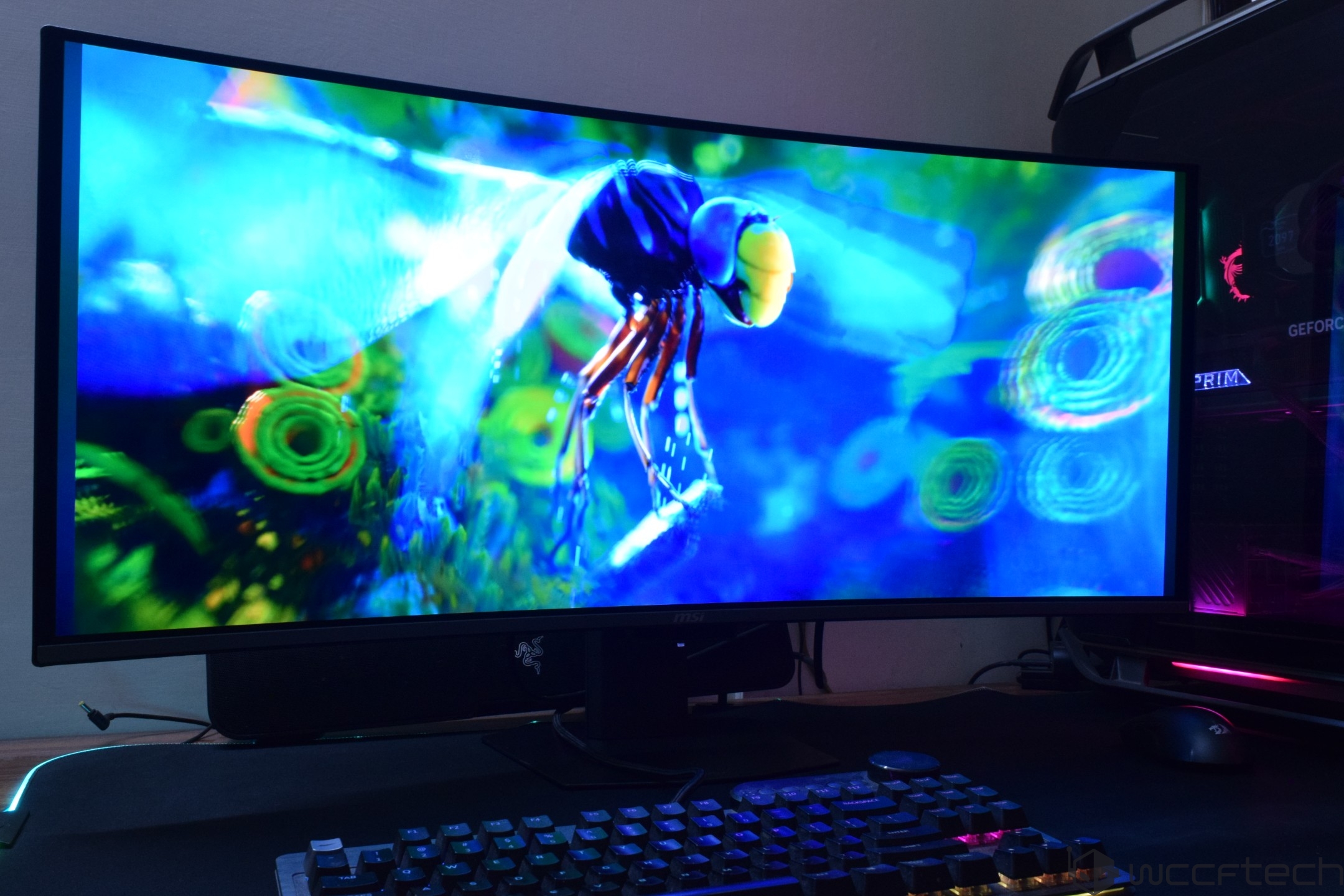
The MPG 341CQR X36 is something we reviewed hands-on, and we can confidently say that it was the best display shown at the event. A 34-inch display equipped with Samsung’s latest 5th-gen QD-OLED panel is what you would want for bright visuals without having to compromise on the contrast, color reproduction, or any other properties you expect on modern QD-OLED monitors. It’s extremely immersive, thanks to its curvature on a big ultra-wide screen, and it’s also much faster than its predecessor, jumping straight from 240 Hz to 360 Hz refresh rate. It’s an all-round package built with the best of the technologies currently available for OLED monitors, covering everything from connectivity to AI-driven features.
Runner Up: ASRock Taichi OLED Series
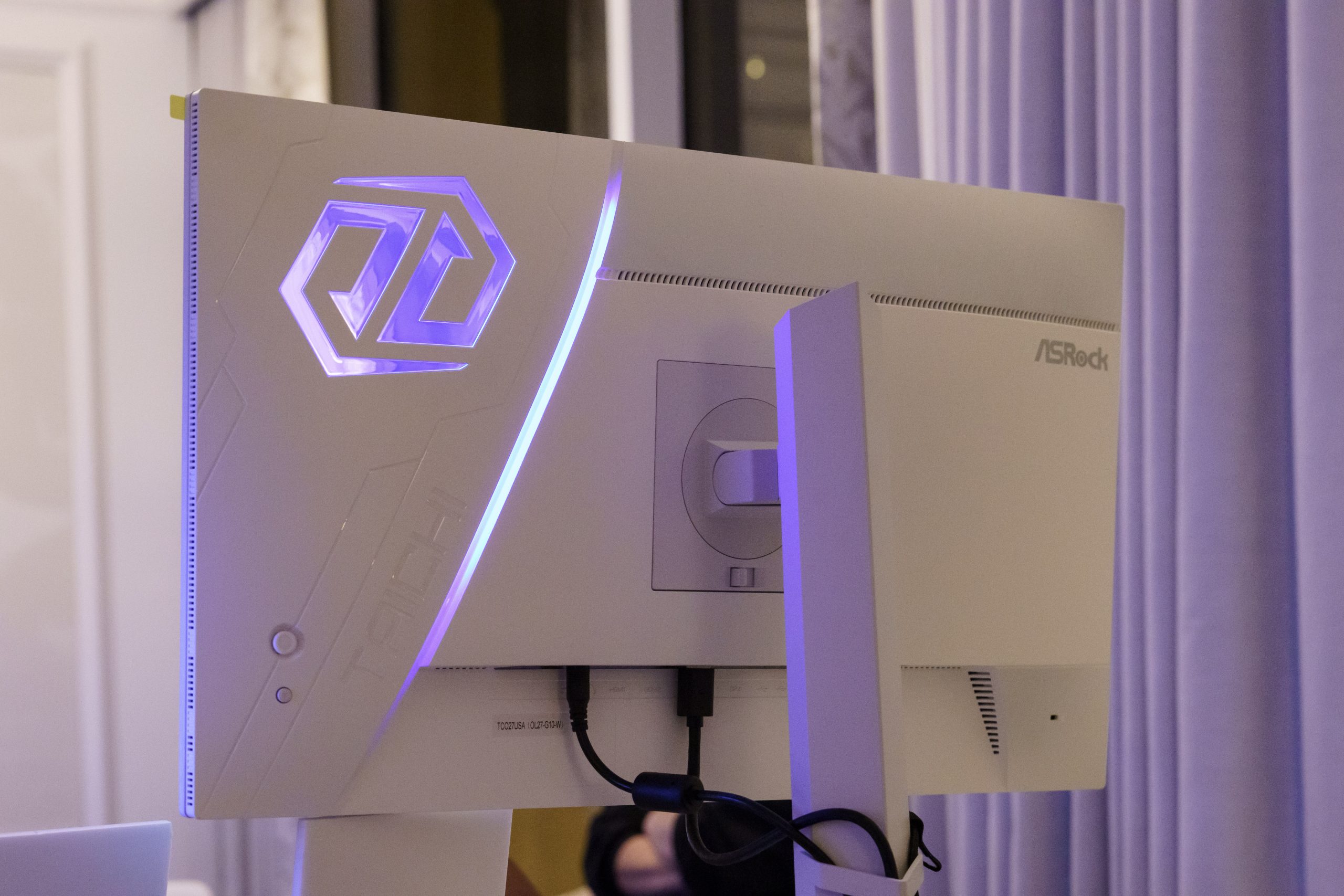
ASRock brought an ecosystem of PC hardware and peripherals to CES, including a dedicated OLED monitor lineup under the Taichi series. The series brings three models, all featuring 27-inch OLED panels such as QD-OLED and WOLED, and resolutions ranging from 2K to 4K. With up to 540 Hz of refresh rate, DisplayHDR TrueBlack 400 support, and modern connectivity, all three monitors appear to be solid for enthusiast gamers. The Taichi TCO27QX is particularly an amazing display that brings a dual-mode configuration, featuring 540Hz@2K and 720Hz@720p modes, which is surely not the best we have on the market, but is more than sufficient for most.
Best SSD and SSD Tech: Micron 3610, Phison E37T
We know Micron has left gamers disappointed by leaving the DRAM consumer business completely, but it’s still making consumer SSDs (and hopefully will do so in the future). At CES, the company introduced the world’s first Gen 5 QLC SSD called 3610, which brings up to 4 TB storage on a compact 2230 M.2 form-factor for Mini PCs and handhelds. Of course, the Micro 3610 Client SSD is also available in other form factors, such as 2242 and 2280, bringing similar specifications, which deliver up to 11,000 MB/s Sequential Read and up to 9,300 Sequential Write speeds. These aren’t even close to the leading Gen 5 M.2 SSDs, but that’s all we had for the storage drives.
Best Upcoming Consumer Tech: Panther Lake Handhelds
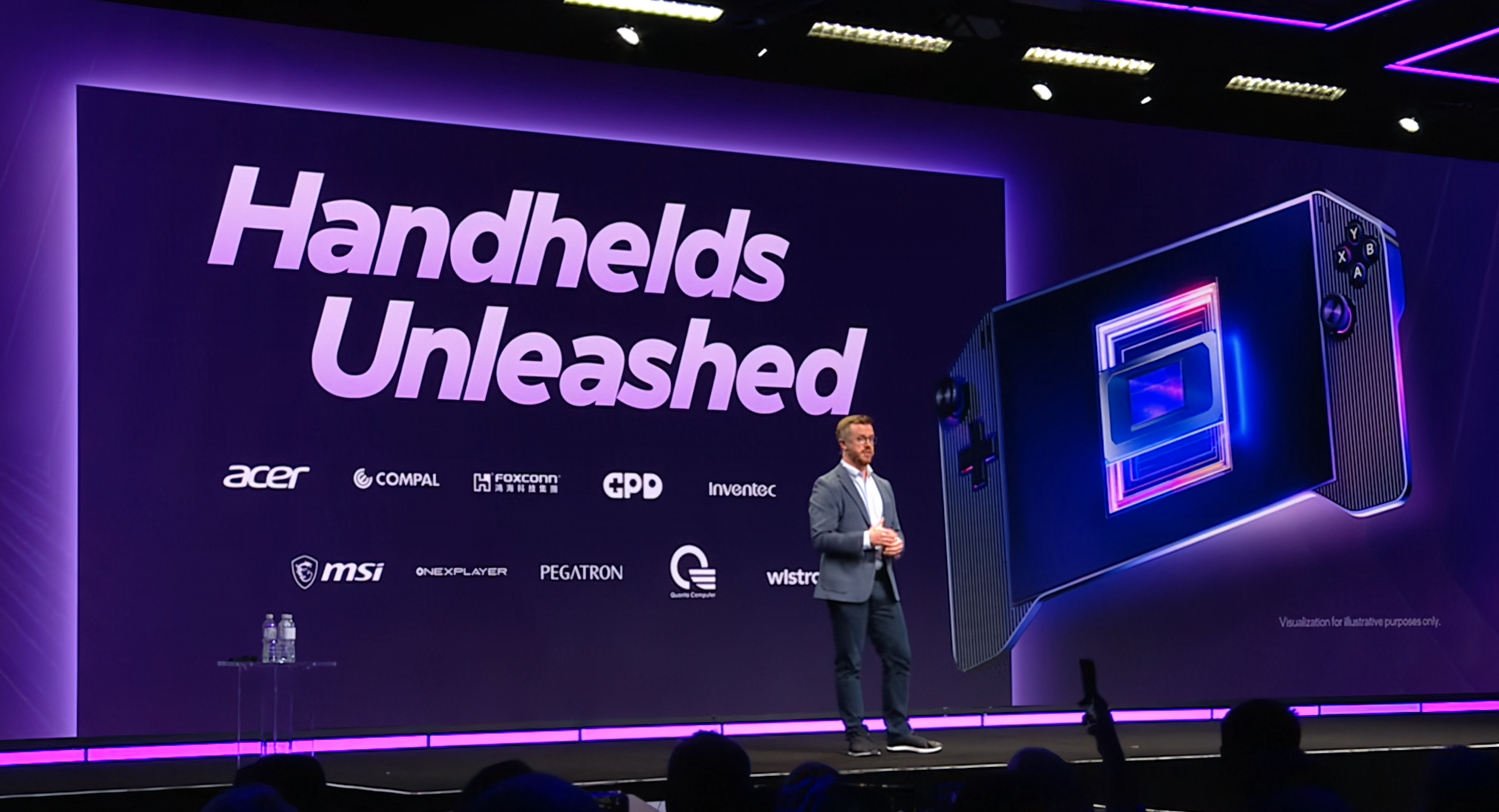
Before Intel announced the Panther Lake CPU family at CES, earlier reports already suggested that Intel is aiming to bring these chips to the gaming handhelds to compete against AMD’s Zen 5 chips. The company is expected to bring a dedicated family for the handhelds this year and believes that it will be much better than its rivals, as, apparently, AMD is using “ancient chips” for the handhelds. Hopefully, with custom SKUs that bring Arc B390 and B370-equivalent iGPUs, we can expect strong competition in the handheld market this year, and probably MSI will be the first to one to adopt these chips for next-gen Claw handhelds.
Follow Wccftech on Google to get more of our news coverage in your feeds.
VIA: wccftech.com