

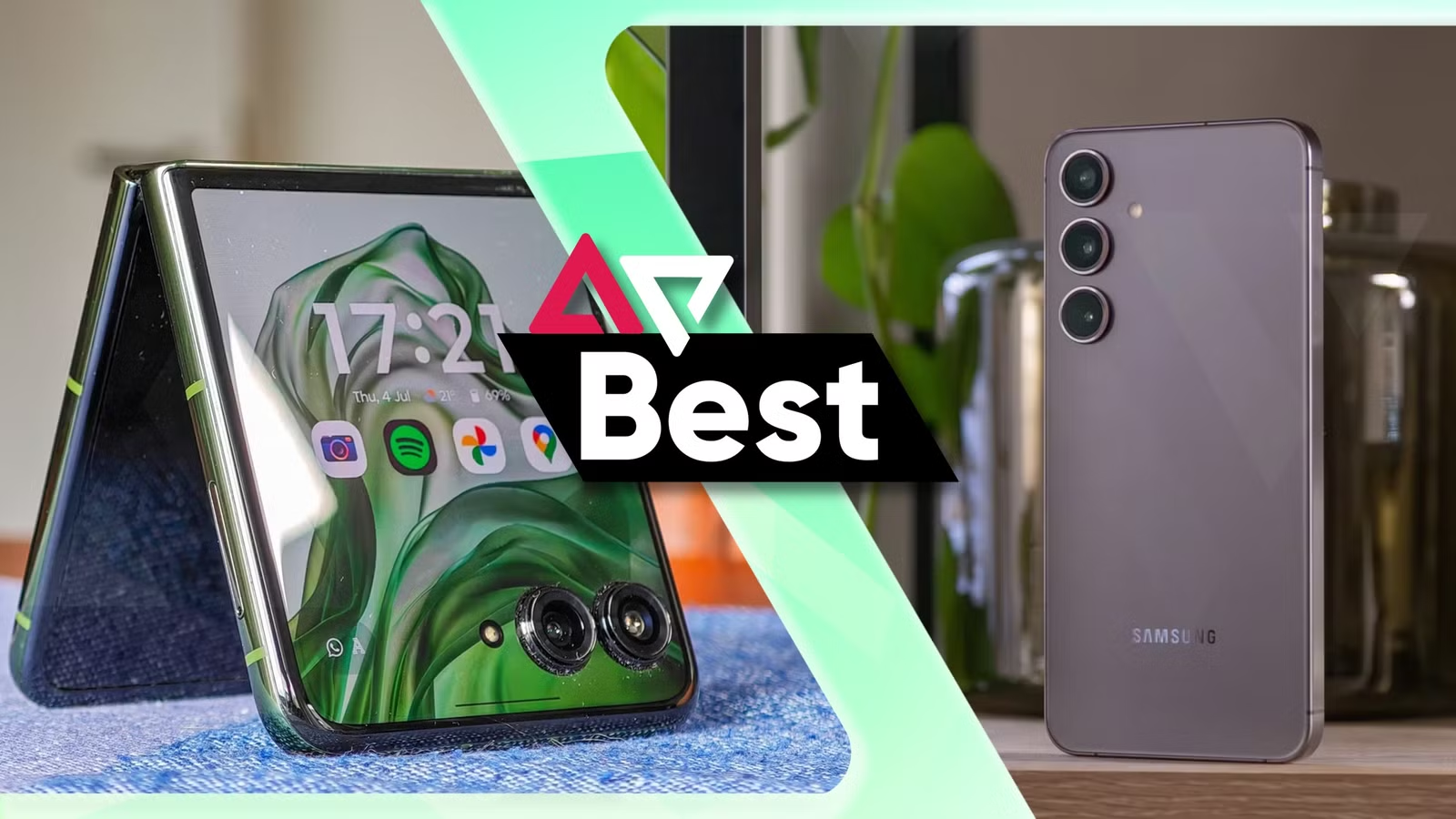
Android smartphones come in all shapes, sizes, and form factors, offering a wide range of unique devices that cater to users’ needs — and many go on sale throughout the year and during launch events.
We have foldable smartphones and compact devices that let you take on even more challenging tasks or make it easier to use your phone when your other hand is full.
While the choice of premium devices is vast, there is a fairly short list of phones we recommend for their unique attributes.
We have a list of the best Android smartphones that are worth every penny, including devices from Samsung, Google, Motorola, and many more.
These devices are la crème de la crème, meaning they are among the very best, offering beautiful displays, great battery life, solid performance, and capable cameras.
Top-reviewed Android phones

9/10
- SoC
-
Google Tensor G5
- Display type
-
Super Actua
- Display dimensions
-
6.8-inches
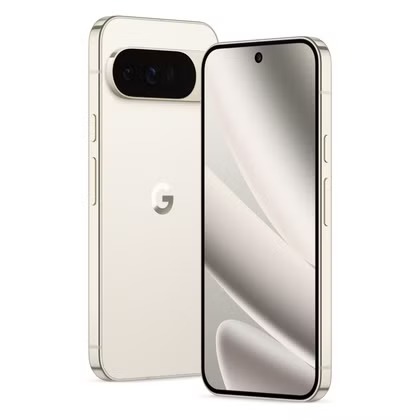
In a very tight competition, the Google Pixel 10 Pro LX takes our top spot for best overall Android smartphone. It has great performance, fantastic battery life, and an excellent camera that reliably takes great photos. It’s a big phone, as it sports a 6.8-inch Super Actua display refreshing at 120Hz. Google included 16GB of RAM, right off the bat, and added 256GB for starting storage.
- Modern and durable design
- Great software support
- Excellent camera
- Expensive compared to the other strong Pixel 10 options
- New AI features were not that impressive
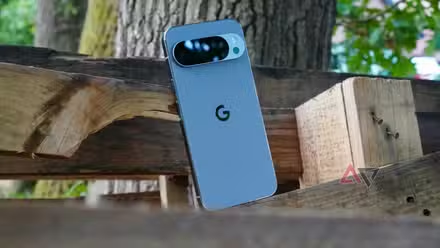
The Google Pixel 10 Pro XL is quite the phone. Google built on the premiumness from the Pixel 9 Pro XL and worked it into the Pixel 10 Pro XL — and it doesn’t disappoint.
We loved how powerful this phone was, but we couldn’t justify the $1,200 price tag when the device first landed. That’s because the Pixel 10 series was stacked, and it was much easier to recommend the Pixel 10 Pro or the Pixel 10 to the average consumer.
But we are discussing some of the best Google has to offer: the Pixel 10 Pro XL. The smartphone has excellent performance, premium build quality, and a gorgeous display.
It builds on many improvements made to the Pixel 9 Pro, adding additional measures to manage heat and improve battery life.
Google Pixel 10 Pro XL: I love it, but here’s why I can’t justify it
It’s all Google’s fault for making 3 great phones
Google promises seven years of software support for the Pixel 10 Pro XL, including major Android upgrades. It’s impressive support, and we’re glad Google is sticking with it.
The Pixel 10 Pro XL’s software features Google’s latest and greatest AI enhancements, including Magic Cue (powered by Gemini), a context-aware assistant built around privacy.
Pixel Studio still remains a fun way to generate images from just a few words. Fan favorites like Now Playing and Call Screening are also still around.
Then there are the versatile Pixel cameras. The Pixel 10 Pro XL has a 50MP primary sensor, a 48MP 5x optical periscope zoom, and a 48MP ultrawide.
It’s the same cameras as the Pixel 9 Pro XL, but the improvement comes from the 100x Pro Res Zoom from the Pixel 10 Pro XL, a much bigger increase than the previous 30x limit of the Pixel 9 Pro XL.
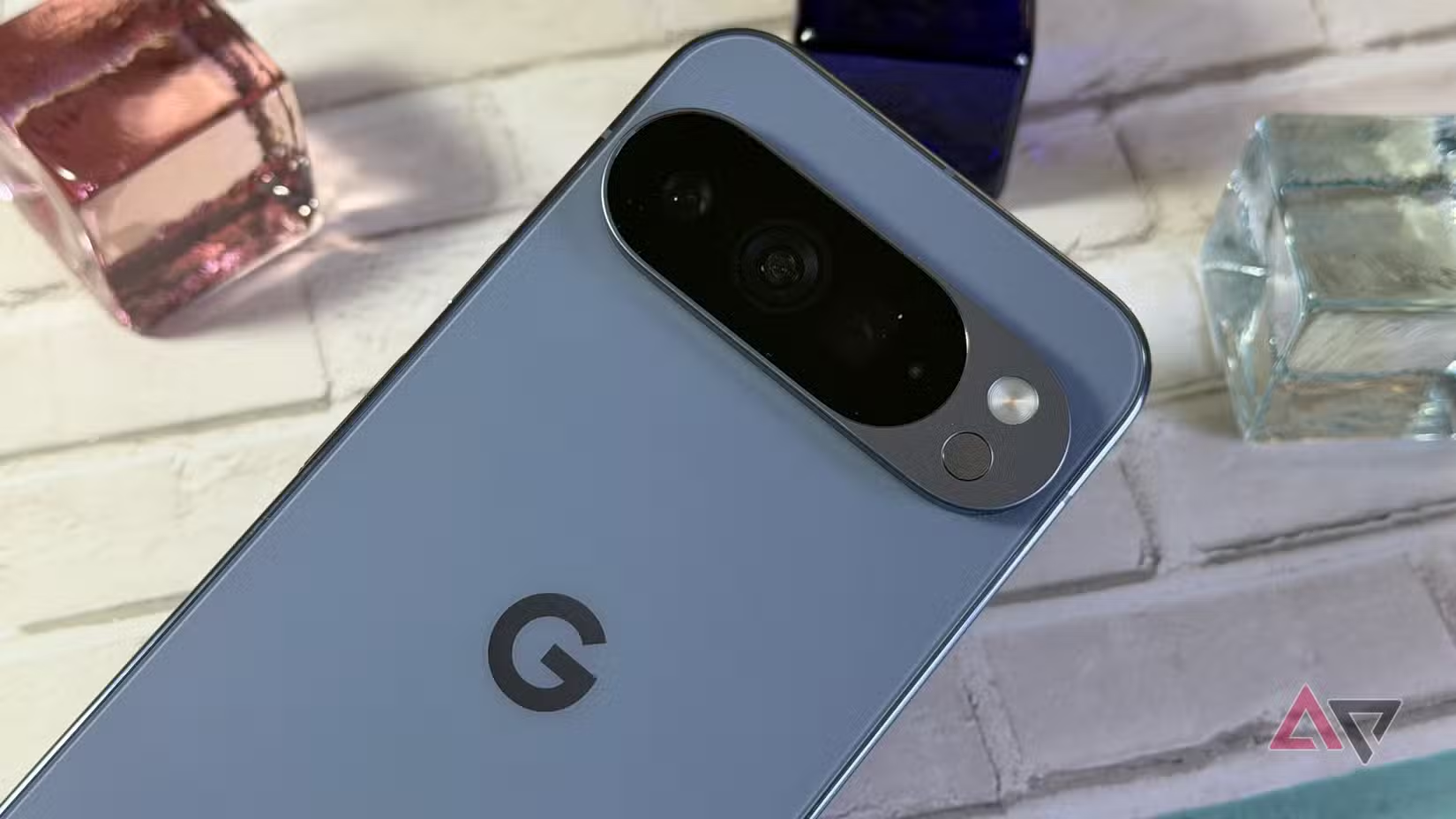
But that’s not necessarily a bad thing that the other camera specs haven’t seen a major upgrade.
The images from those phones’ cameras have already been consistent and well-matched thanks to Google’s computational photography. Night Sight remains excellent, producing crisp, detailed low-light photos.
The Pixel 10 Pro XL also has improved stabilization for both photos and video, reducing blur, and there’s noticeable noise reduction in low-light videos.
The Pixel 10 Pro XL retains a similar design to the Pixel 9 Pro XL, but is slightly heavier. Though we arguably praised the Pixel 9 series as the company’s best design to date, that still applies to the Pixel 10 series. These smartphones remain flat in your hand, making them more comfortable to hold.
Similar to its predecessor, the Pixel 10 Pro XL still sports Gorilla Glass Victus 2 front and back, with a polished aluminum frame. Google kept its design from last year, and we are glad for it.
All told, if you pick up a Pixel this year, you won’t be disappointed. Google made some welcome refinements to its lineup, while retaining its great specs. The Tensor G5 chip is noticeably faster and more efficient at handling AI workloads.
The Google Pixel 11 is still months away, but until it arrives, the Pixel 10 Pro XL is the best premium choice. If you need to save on costs, the Pixel 10 Pro and Pixel 10 are still wonderful phones in this lineup.
8/10
- SoC
-
Qualcomm Snapdragon 8 Elite Gen 5
- Display type
-
Dynamic AMOLED 2X
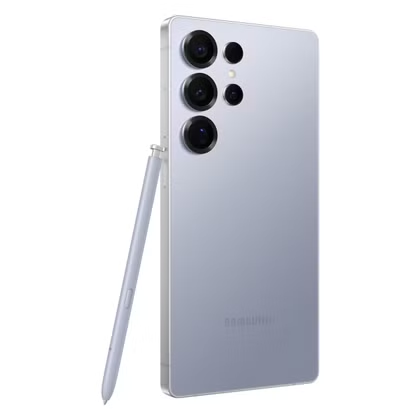
The Samsung Galaxy S26 Ultra is a masterclass in mobile engineering, blending powerful hardware with next-generation software. It commands attention with its massive 6.9-inch Dynamic AMOLED 2X display and Qualcomm’s most powerful smartphone chip to date, the Snapdragon 8 Elite Gen 5. On top of this phone’s impressive specs, Samsung’s most premium flagship features a new privacy mode, Privacy Display, that shields your screen from prying eyes at the touch of a button.
- Fantastic display
- Ergonomical improvements
- Ample performance
- Lack built-in Qi2 magnets
- Galaxy AI features are still not interesting enough
It’s difficult to talk about premium smartphones without mentioning the Samsung Galaxy S26 Ultra near the top of the list.
Samsung didn’t wow us with the design in 2025, but thankfully, the Galaxy S26 Ultra improved in this area. It’s not as sharp and awkward to hold. The Galaxy S26 Ultra is thinner, lighter, slightly curvier, and much more comfortable in your hand than last year’s model.
Aside from improved ergonomics, the Galaxy S26 Ultra still offers all the specs you’d expect from a high-end flagship device.
It features a stunning 6.9-inch Super AMOLED display with a QHD+ resolution and 120Hz refresh rate.
And it’s not just the specs that make the Galaxy S26 Ultra display excellent. Like the Galaxy S25 Ultra, this phone also has an anti-reflective layer from Corning’s Gorilla Armor 2 that significantly reduces glare outdoors.
The Galaxy S26 Ultra easily handles whatever you throw at it, and it’ll be some time before you notice the phone slowing down.
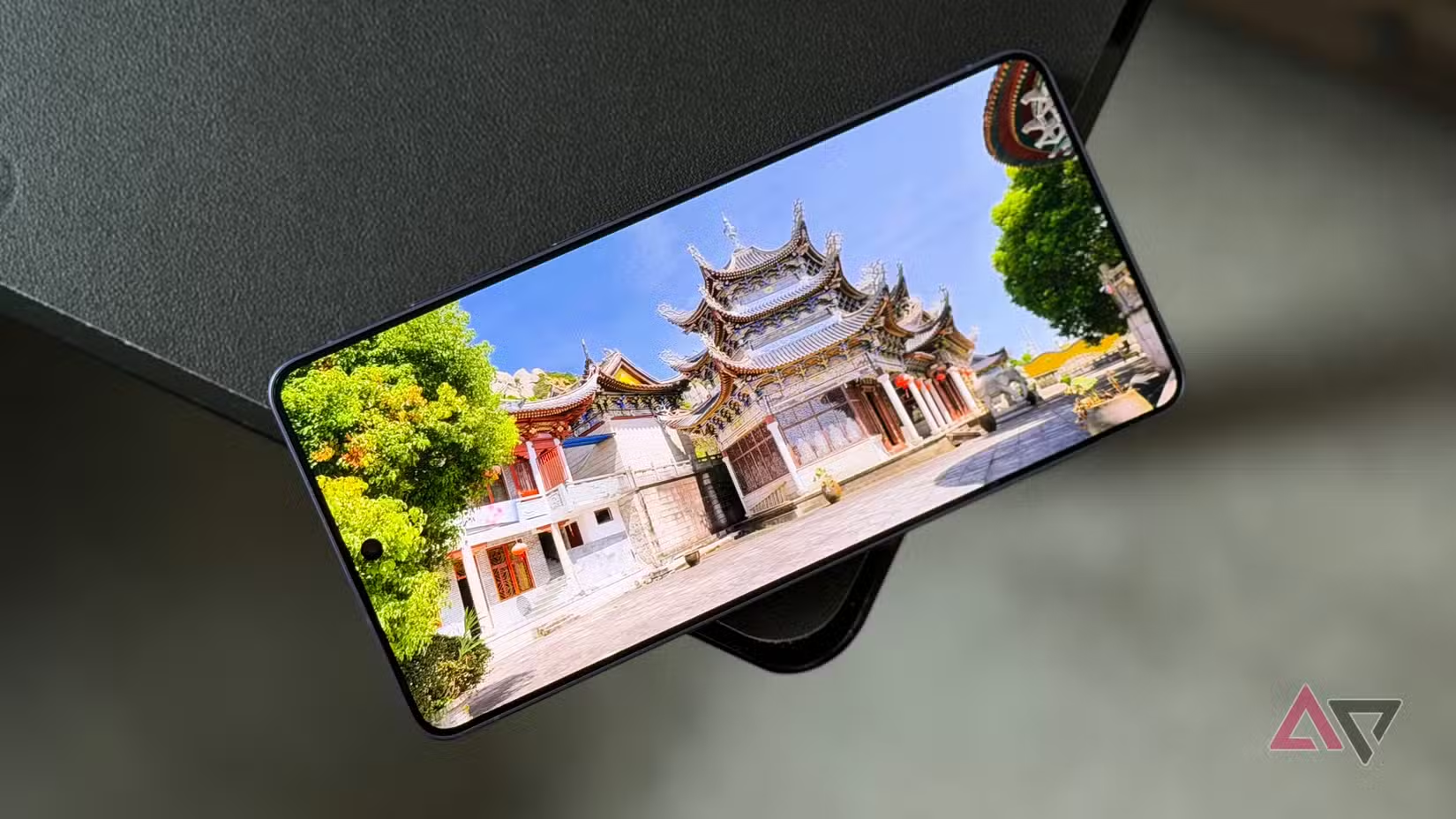
Plus, if you really want to get into the nitty-gritty of what the Galaxy S26 Ultra display has to offer, we can’t forget to talk about the new Privacy Display that this Samsung smartphone has.
The Galaxy S26 Ultra features a Private Display that prevents others from viewing your phone’s contents at an angle while keeping the screen perfectly clear and visible to the intended user.
You can customize it so it only occurs while you’re perusing certain apps, like banking, and you can also toggle it on/off in general.
The idea behind the Privacy Display is to give the user maximum control — so if you want to use it, you can, but the option is there if you don’t want to engage with it.
As for the rest of it, Samsung still packs what you’d expect under the hood of the Galaxy S26 Ultra, including a Snapdragon 8 Elite Gen 5 (for Galaxy) and 12GB of RAM (a higher-tier variant offers 16GB if you need it).
The Snapdragon 8 Elite Gen 5 is a subtle improvement over the Snapdragon 8 Elite that’s in the S25 series lineup. It’s a fantastic chipset that offers a mix of raw performance and power efficiency.
The Galaxy S26 Ultra remains a powerhouse phone and handles the most demanding of tasks comfortably, including gaming at higher settings.
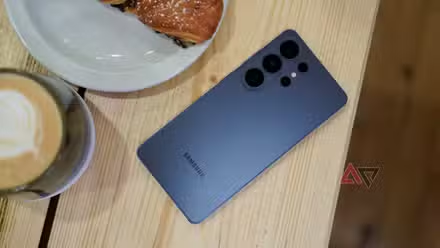
I reviewed the Samsung Galaxy S26 Ultra, and it’s so much better than all the drama
Yes, we address the drama and broken promises, but the phone takes center stage
Samsung’s software underwent a major visual overhaul with One UI 7, and One UI 8 continues to build on that. The Galaxy S26 Ultra comes with One UI 8.5, which makes Galaxy AI a little easier to use and offers a nicer UI design.
Samsung promises seven years of One UI upgrades and security updates for the Galaxy S26 Ultra, an impressive amount of support.
However, Samsung didn’t budge on increasing the battery size or adopting newer silicon-carbon technology.
Still, much like the Galaxy S25 Ultra, the Galaxy S26 Ultra’s 5,000mAh battery does the job, providing a full day of use on a single charge, maybe even more if you’re a light user.
If you’re in the market for a premium flagship and love Samsung’s software, the Galaxy S26 Ultra is worth a look and guaranteed to be the best the company has to offer.
9/10
- SoC
-
Google Tensor G4
- Display type
-
Actua display
- Display dimensions
-
6.3-inches
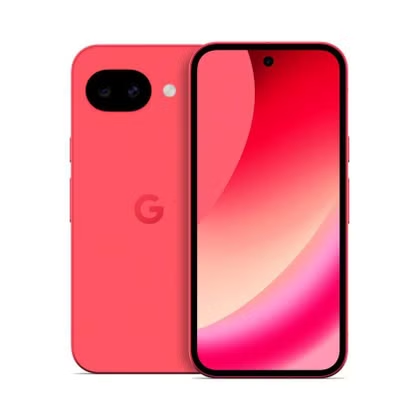
The Google Pixel 10a features a Tensor G4 chipset and 8GB of RAM. It includes a 6.3-inch Actua panel and a 1080p resolution. The phone packs a 5,100mAh battery and a 48MP primary camera sensor, with a 13MP ultrawide lens. It ships with Android 16, and Google promises 7 years of software updates.
- Fantastic software
- Great cameras
- Excellent battery life
- Slow charging
- Very little upgrades from the Pixel 9a
- 128GB of base storage
Google’s A-series releases are always among the most exciting. That’s because they tend to land in the high-value category, where you’re getting near a flagship experience but at a fraction of the cost.
The Google Pixel 10a is no exception. It’s currently the best $500 you can spend on a smartphone. It’s a device with few weaknesses for the money, and if you want a phone that does a little bit of everything, the Pixel 10a is your choice.
Google kept the display size at 6.3 inches, the same as the Pixel 9a. But the material is now covered with Gorilla Glass 7i, to give it a little extra protection from microabrasions.
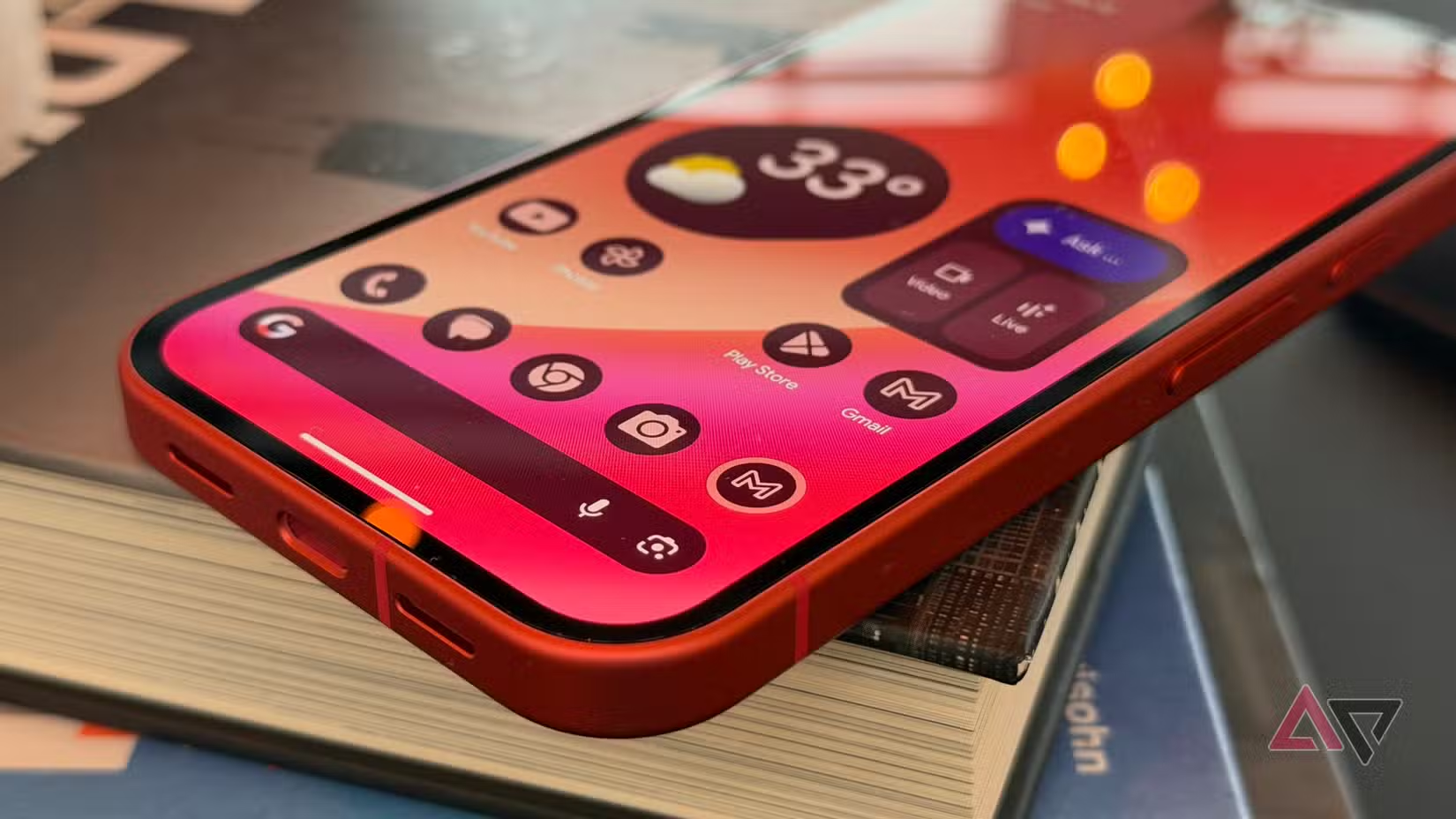
Its Actua screen is vibrant, with excellent color and a max brightness of 3,000 nits, making outdoor viewing easy. Google has shipped significantly better displays in the last few years, and that improvement still extends to its midrange devices.
Even if you don’t think the Tensor G4 is a flagship chipset, it’s hard to argue about its performance when you’re only paying $500. Plus, it has an upgraded component with the Exynos 5400 modem to improve efficiency and connectivity, all while keeping costs the same as before.
As expected from Google, the software experience is excellent, and the Material 3 Expressive elevates it even further.
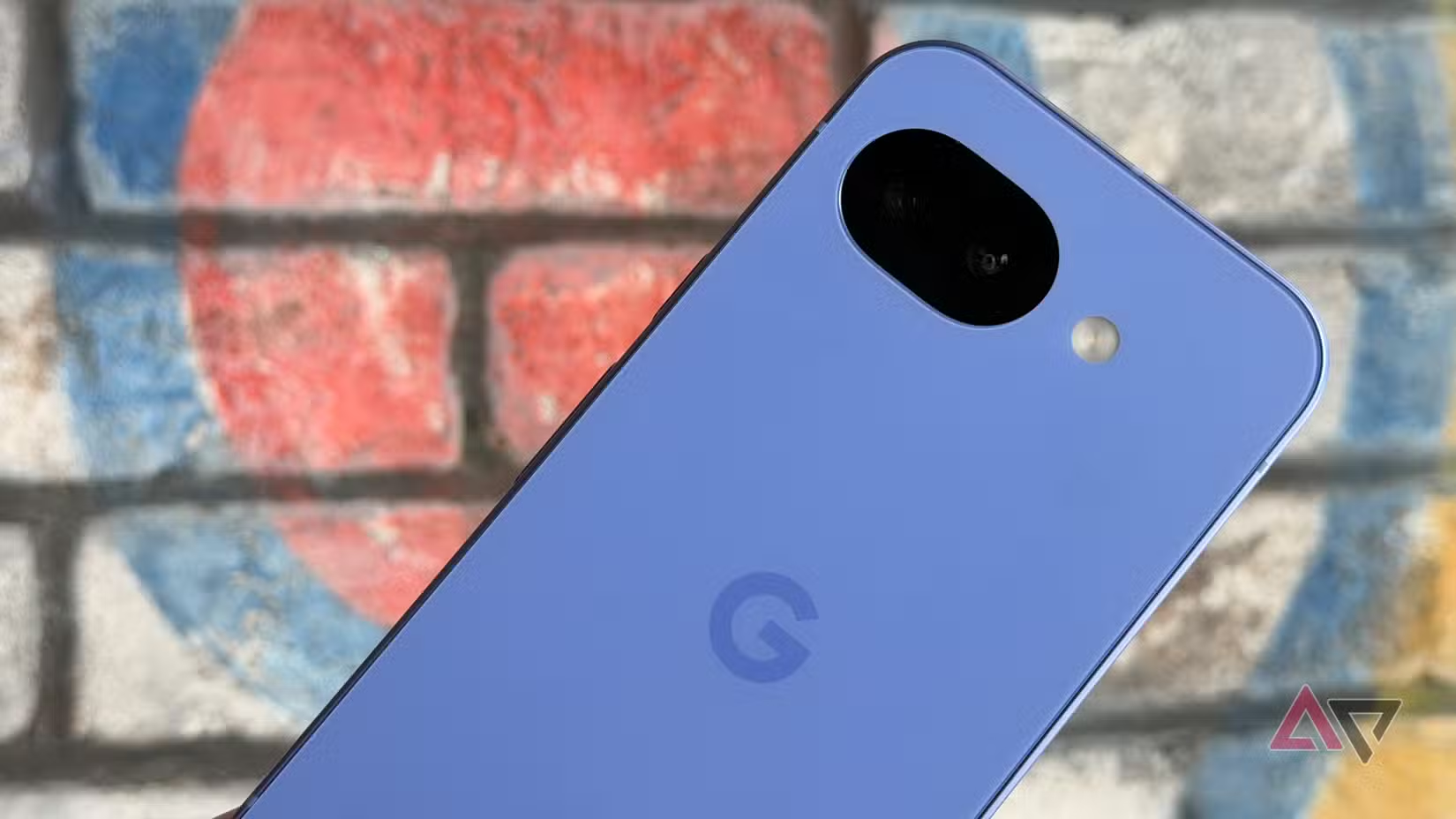
As with its other flagship devices, Google also promises seven years of software support for the Pixel 10a, so it won’t be obsolete anytime soon.
The Google Pixel 10a features a 5,100mAh battery, like its predecessor. We’ve also praised it for having one of the best batteries of any Pixel device (though this might be beaten by the Pixel 10 Pro XL), and that still holds.
You can easily get two full days of mixed use on a single charge, and while recharging speeds are still only okay, it’s a slight improvement over the Pixel 9a’s 23W wired charging and 7.5W wireless.
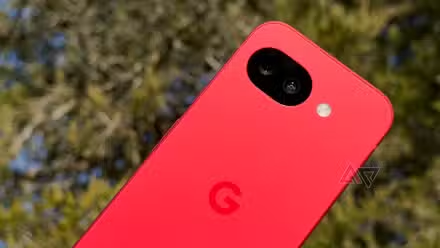
The Google Pixel 10a is easy to criticize — until you use it
Google knows who is buying
Best of all, it’s a Pixel, so point-and-shoot photography is fantastic, and the low-light performance is the best you’ll find on a phone under $500.
The Pixel 10a is technically the best A-series phone to date, so you can’t go wrong with picking one up — though it doesn’t do that much over a Pixel 9a, so if you see the Pixel 9a at a discount, you’re better off getting almost the same phone, but cheaper.
But if both phones are at the same price point, you should buy the Pixel 10a to get the most value out of your dollar.
7.5/10
- SoC
-
Qualcomm Snapdragon 8 Elite for Galaxy
- Display type
-
120Hz AMOLED
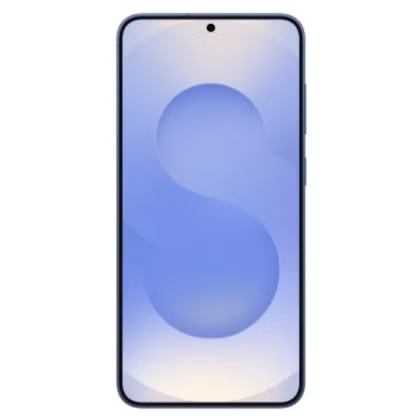
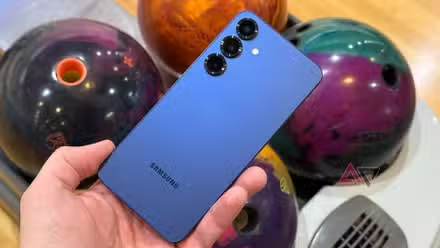
The Samsung Galaxy S25+ is the middle offering in the company’s lineup. It features a 6.7-inch AMOLED QHD+ display with a 120Hz refresh rate. The new Snapdragon 8 Elite chipset powers it, and it has 12GB of RAM, and either 256 or 512GB of storage. Samsung didn’t increase the battery size for 2025, leaving it at 4,900mAh, although a more efficient chipset has resulted in better battery life. It’s thin and lightweight, at just 7.3mm and 190g, respectively.
- Excellent display
- Strong performance
- Great battery life
- No updated cameras
- Slow charging
Even though the Samsung Galaxy S26 Ultra is the best overall Samsung you can buy, the Galaxy S25+ is the smartest pick you can make, even if this is still a last-gen phone.
It’s the middle child of the company’s flagship lineup from last year, and it’s the phone I recommend for most Samsung fans.
It features the same stellar Snapdragon 8 Elite chipset with 12GB of RAM as its more expensive sibling, with a gorgeous 6.7-inch Dynamic AMOLED QHD+ panel.
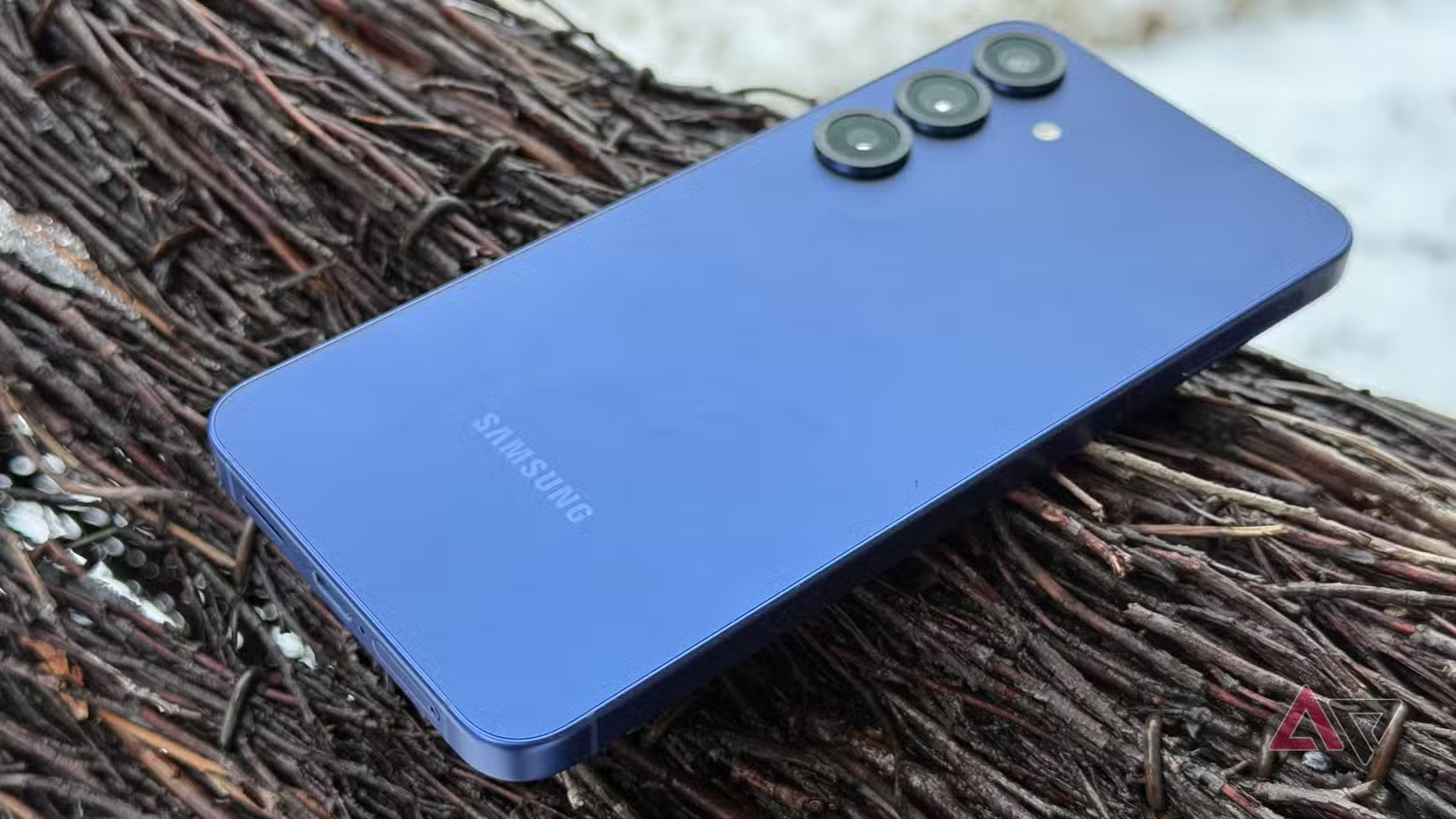
Everyone talks about how thin the Galaxy S25 Edge is, but the S25+ is only 7.3mm thick and feels fantastic in the hand, thanks to its premium construction.
Daily performance and gaming are top-notch, and Samsung promises the same seven years of software support and security updates as the other phones in its flagship lineup.
One UI runs smoothly, and I’m eager to see the advancements that come with One UI 9.
Samsung didn’t increase the battery size in 2025, but thanks to the efficiency of the Snapdragon 8 Elite, I still get over a day’s worth of use from its 4,900mAh battery.
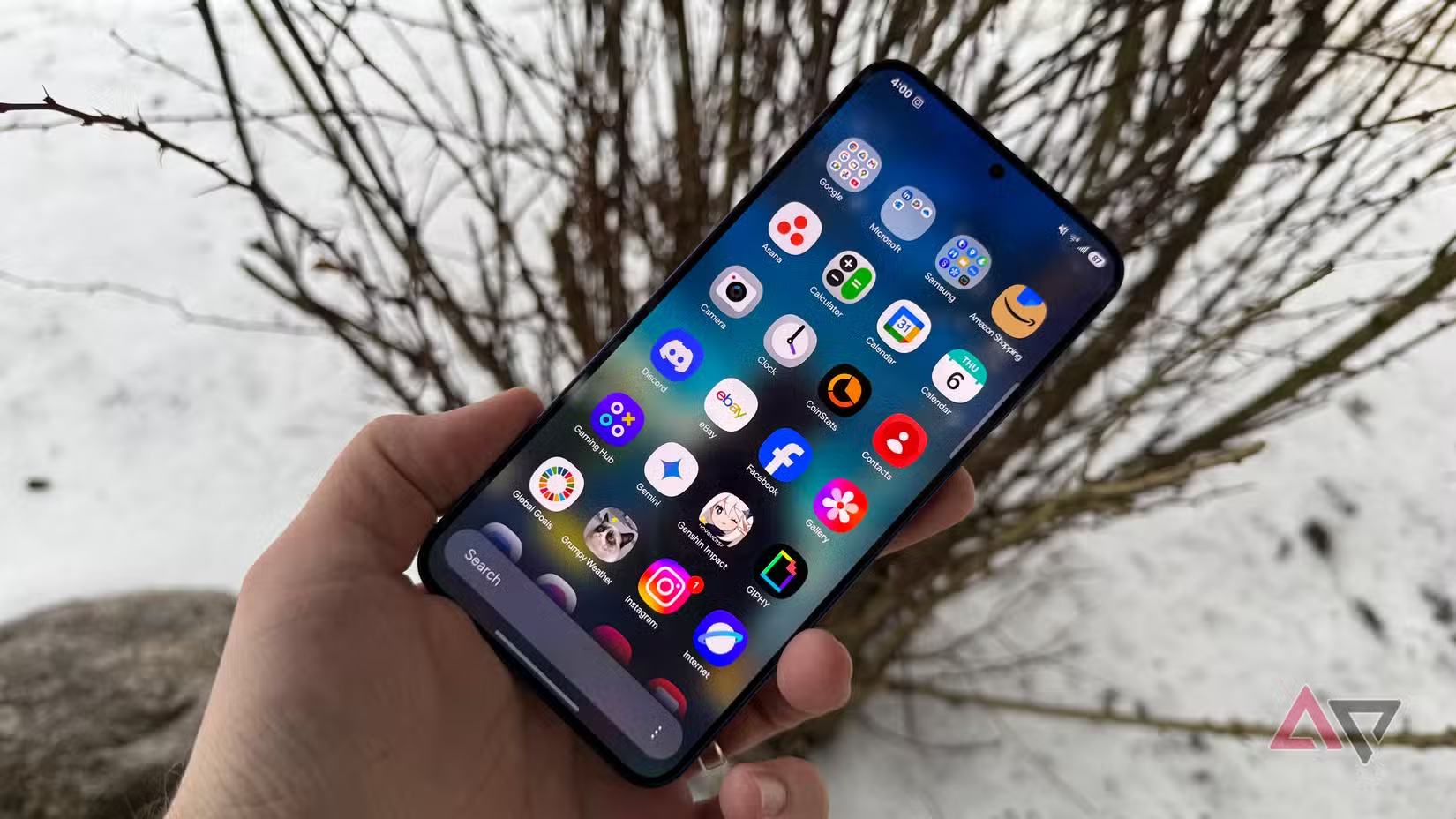
The phone’s 50MP primary sensor produces fantastic photos, and I’ve come to appreciate Samsung’s slightly warmer color science in its photography.
Pair all this with some of the ridiculous deals I’ve seen on the Galaxy S25+, and it’s a hard phone to beat, even in 2026.
The Galaxy S25+ proves the Samsung you love is long gone
Good enough is the new standard
7/10
- SoC
-
Qualcomm Snapdragon 8 Elite
- Display type
-
AMOLED, pOLED
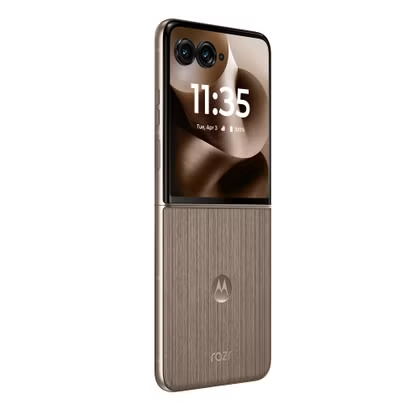
The Moto Razr Ultra is the foldable you’ve been waiting for. With a new camera system, top-tier specs, and a larger, brighter display, this is a Razr designed to go head-to-head with Samsung — for a price, of course.
- Stylish design and durable
- Great outer display
- Excellent battery life
- Limited software support
- Expensive
We are huge fans of the Motorola Razr series, as the company has done an excellent job of making phones fun again.
Motorola understands why people buy clamshell foldables, and the Motorola Razr Ultra 2025 is a prime example.
We previously had the Motorola Razr series on this list, and while we loved it and recommend it to those looking for a premium experience on a budget, we can’t help but mention its Ultra sibling.
But this is also a list of where premium phones get mentioned, and Motorola doesn’t usually release phones that push the limits.
The Motorola Razr Ultra 2025 is by far one of Motorola’s most powerful phones.
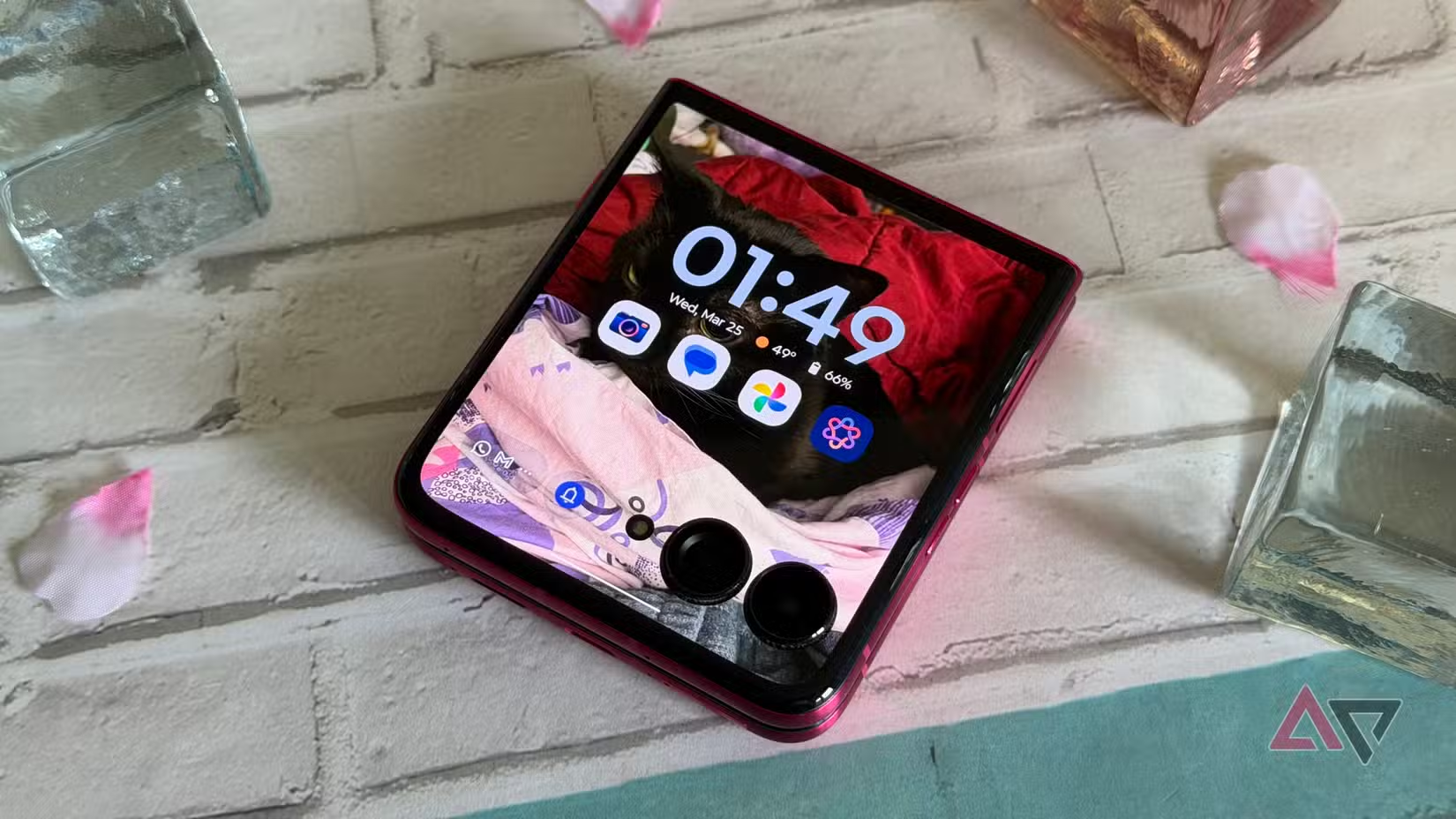
Similar to the Razr 2025, Motorola nailed the design of the Razr Ultra, making it sleek and stylish, with vibrant colors to choose from.
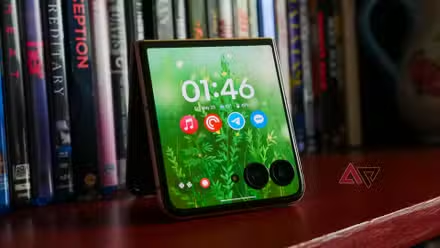
Its 4-inch cover screen is more usable than you think and works seamlessly with your apps — unlike some other phones, where you sometimes need to rely on tools like Samsung’s Good Lock or third-party software to get it working on the outer display.
Under the hood, it’s Qualcomm’s Snapdragon 8 Elite chipset, which is quite good, and it has 16GB of RAM, ensuring smooth performance and decent gaming.
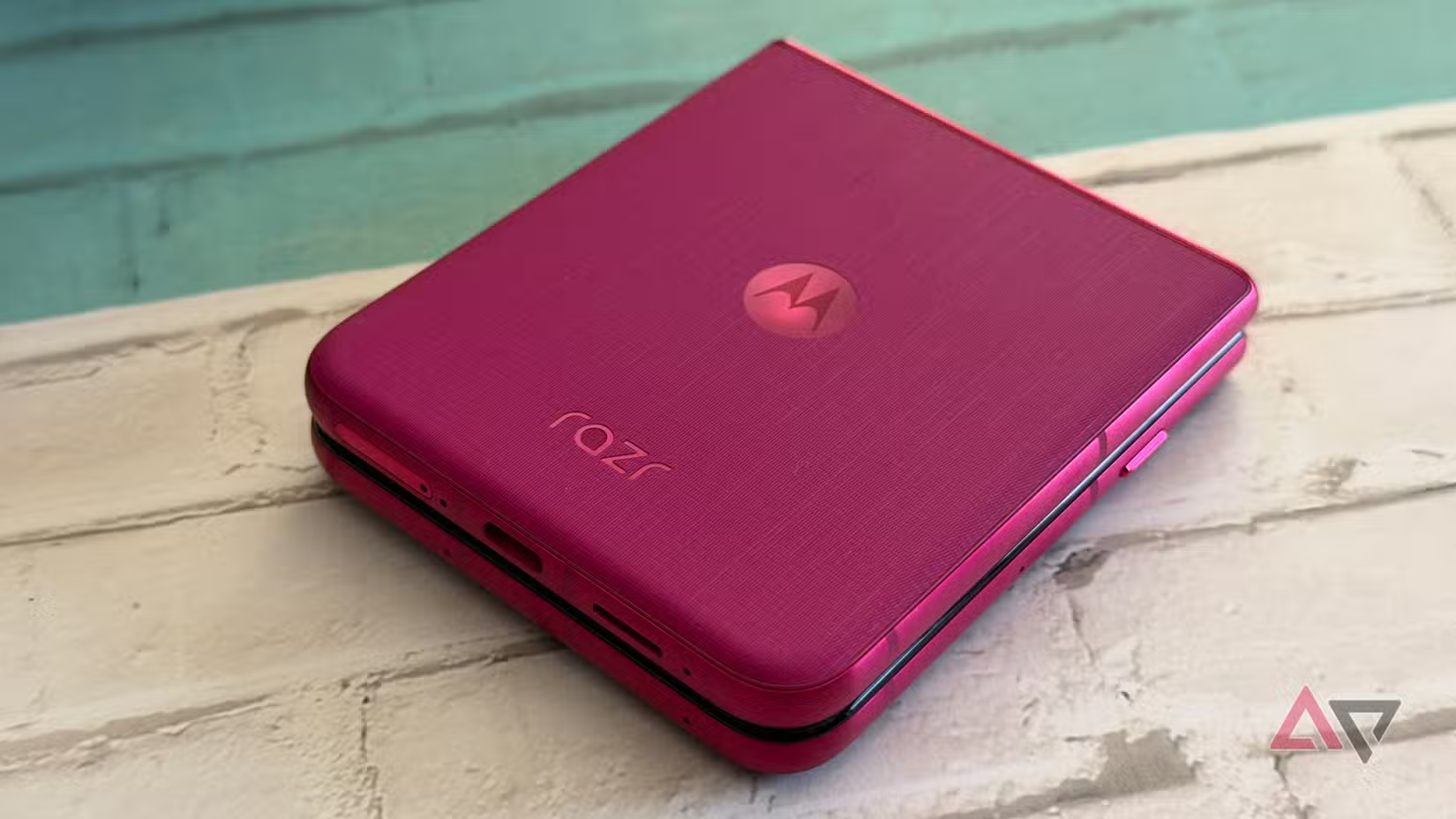
The Razr Ultra 2025 features a 4,700mAh battery that provides a little more than a full day of mixed use on a single charge.
Motorola also improved durability for 2025, and the Razr is now IP48-rated for dust and water resistance, featuring an enhanced hinge.
If you’re in the market for a premium flip phone that’s both fun and powerful, the Motorola Razr Ultra 2025 should be your first look.
If you want to halve the cost (as $1,300 is way too much), the Motorola Razr 2025 is the one we recommend. It’s a bit weaker but offers a similar experience that should be enough for most people.
Motorola’s Razr Ultra is as impressive as it is expensive
Premium features, premium price
8.5/10
- SoC
-
Qualcomm Snapdragon 8 Elite Gen 5
- Display type
-
LTPO 165Hz
- Display dimensions
-
6.78-inches
The OnePlus 15 brings a massive 7,300mAh battery to the flagship phone table, which when paired with the Qualcomm Snapdragon 8 Elite Gen 5 processor gives it spectacular battery life. Despite the battery size, the phone has a modern design and modest weight, and also showcases OnePlus’s new DetailMax Engine for the camera.
- Excellent performance
- Outstanding battery life
- The new design is more practical
- Software experience can be mixed
- DetailMax Engine still needs work
We previously loved the OnePlus 13 and felt it was always worth a recommendation given what you’re spending, and the OnePlus 15 is everything the OnePlus 13 was and (mostly) better.
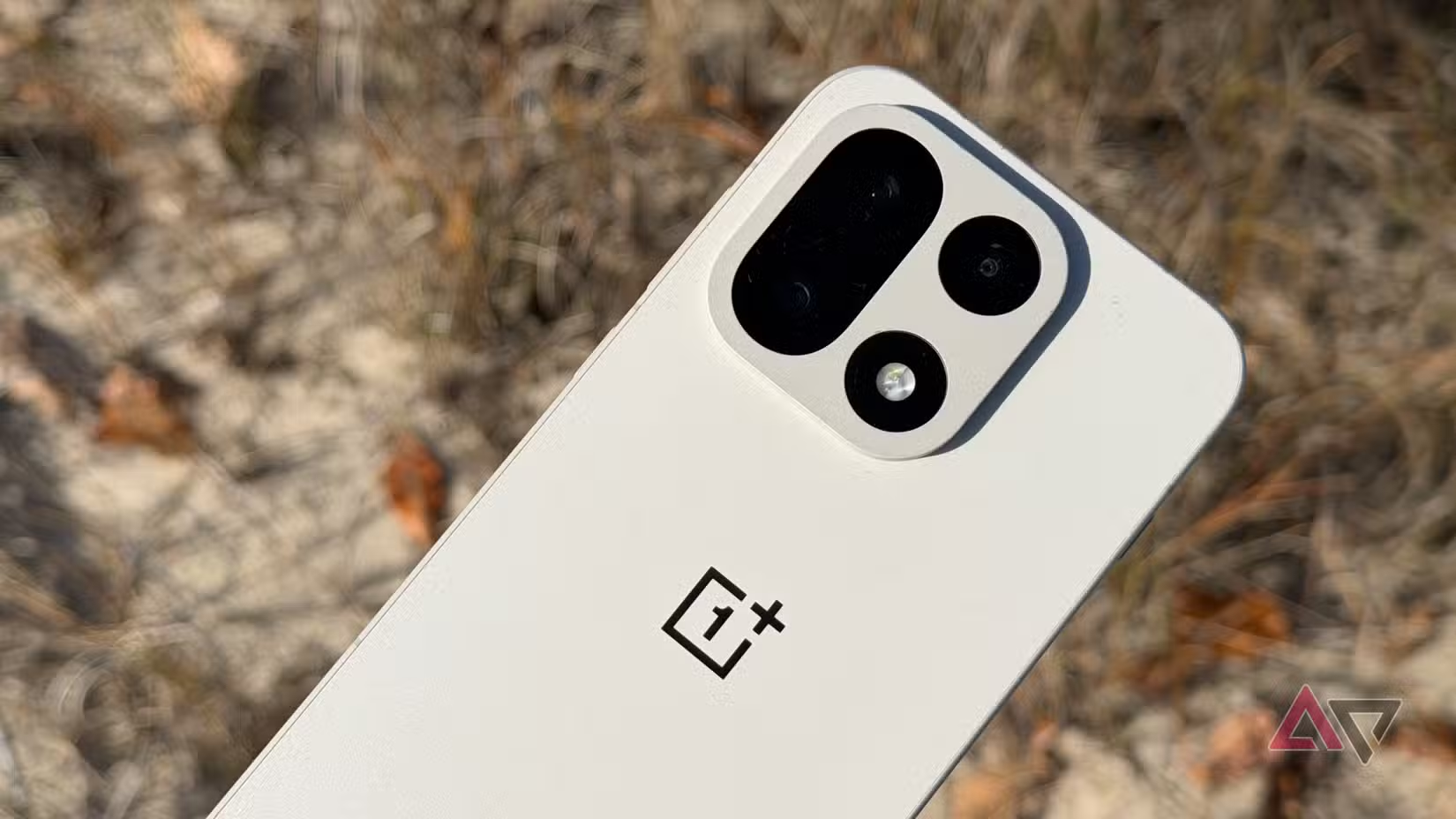
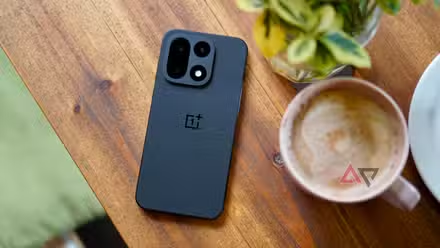
OnePlus moved to a slightly different design with the OnePlus 15. Instead of being larger and circular, it became flatter and more rectangular. Though it’s not so flat and straight that it can dig into your hand.
You can’t be disappointed with the phone’s performance. It’s powered by a Snapdragon 8 Elite Gen 5 chipset with 12 or 16GB of RAM. It absolutely chews through anything you throw at it.
But it’s the beefy battery that makes this phone stand out amongst the others. OnePlus has put a 7,300mAh battery in the OnePlus 15.
That’s hefty compared to the Galaxy S26 Ultra’s consistent 5,000mAh, which is placed in its latest premium flagship.
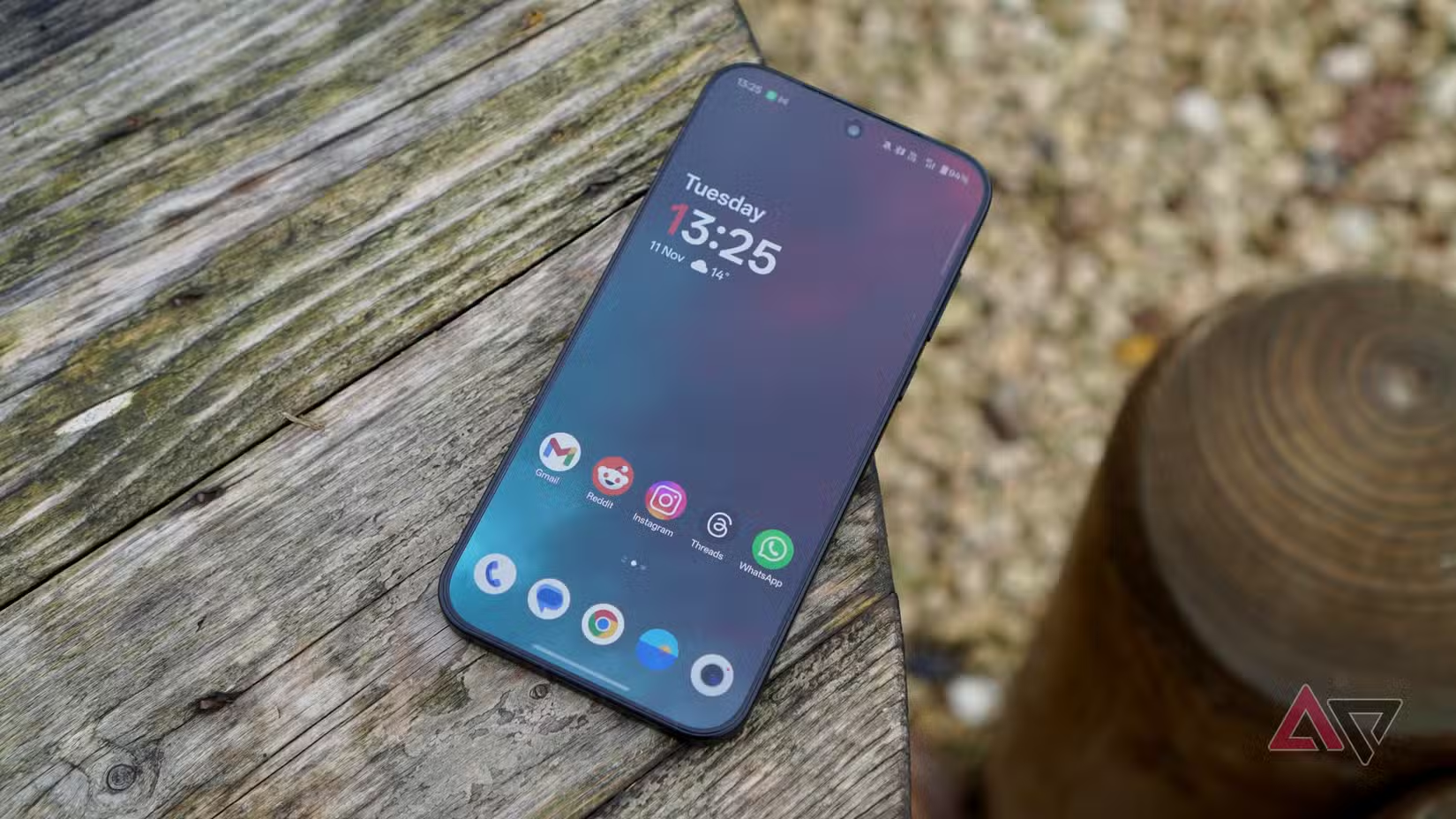
Not to mention that its 6.78-inch AMOLED screen is also quite gorgeous, and the phone is an absolute monster to power it.
Plus, if you’re worried about downtime, you shouldn’t be, as the OnePlus 15 is also capable of 120W wired charging and 50W wireless charging.
However, achieving these speeds will require OnePlus’ proprietary charger, unless you use a compatible BBK Group charger.
If you’re somewhat prone to battery anxiety and thrive on performance and power, the OnePlus 15 is definitely worth picking up in 2026.
OnePlus 15: The end of battery anxiety as we know it
The OnePlus 15 delivers on the hype, in all but one area
8.5/10
- SoC
-
Google Tensor G5
- RAM
-
16GB
- Storage
-
256 GB / 512 GB/ 1TB with Zoned UFS
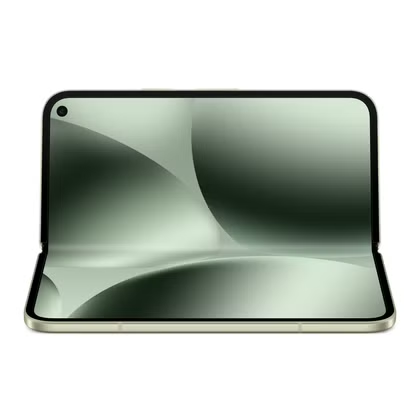
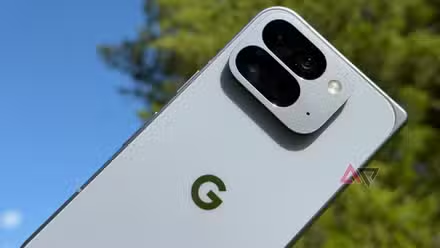
The Google Pixel 10 Pro Fold is a premium, AI-centric foldable that includes tools such as Agentic AI, Magic Cue, and Voice Translate to enhance productivity. Google refined the design to make it more durable than its predecessors, featuring an upgraded gearless hinge and a full IP68 rating to keep it well protected from accidents.
- Fantastic software support
- Long-lasting battery
- Quite durable
- Expensive
- It’s a bit heavy
Google released the Google Pixel 10 Pro Fold in 2025, and it still holds up as a pretty strong phone, even if it’s really big, bulky, and expensive.
There’s plenty to mention: Google has brought the Tensor G5 chipset and included 16GB of RAM. The external display size is 6.4 inches, and the company added an IP68 rating for dust and water resistance.
The hinge is also much more durable and gear-free, making it feel better on the hands without sacrificing build quality.
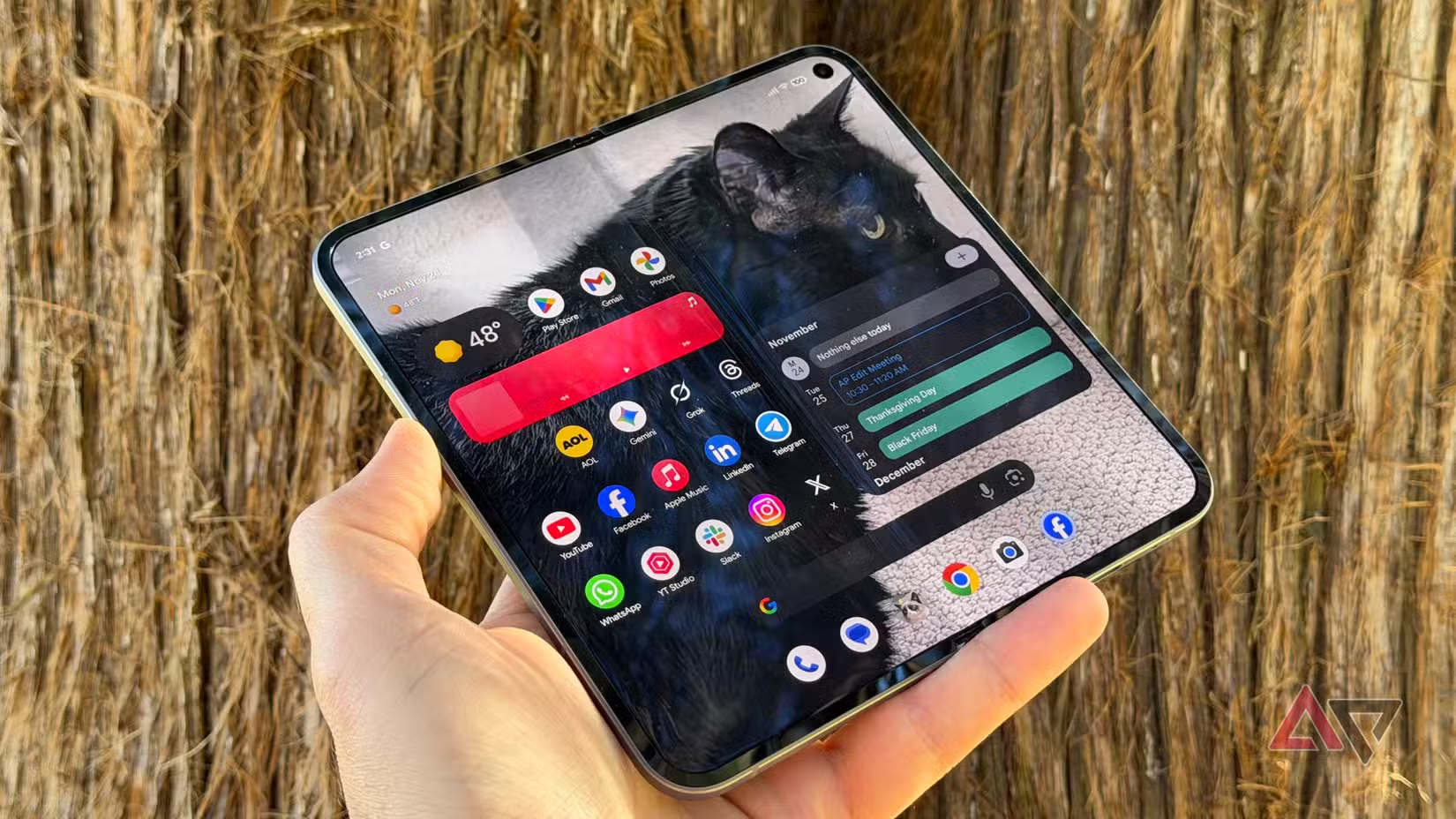
Inside the Pixel 10 Pro Fold is a nicely lit 8-inch Super Actua Flex display with a 120Hz refresh rate, making watching videos a delightful treat.
The company also brought 90:10 split multitasking and app pairs to the device. Using the expansive screen for productivity is quite good.
Even Google Gemini and Magic Cue have seen some improvements, staying naturally integrated across the different Google apps without being too overwhelming.
The battery is also reliable, but the charging speed is only okay. The device is Qi2-compatible, so at the very least, you get more charging options.
It’s not sleek, it’s not cheap — but the Pixel 10 Pro Fold won me over anyway
Notable improvements under the hood
Still, this is a Google flagship device, so you can expect excellent software and the new premium standard of seven years of updates.
That’ll likely matter more when you dish out a very costly device like the Pixel 10 Pro Fold — you do not want the software to become obsolete in a couple of years — instead, you’d rather get the biggest bang for your buck, if you can.
Overall, it’s a pretty good phone, and if you already love foldables, this one from Google is still as premium as ever. If you’re willing to pay the high price, you’ll love it.
7.5/10
- SoC
-
Qualcomm Snapdragon 8s Gen 4
- Display type
-
OLED
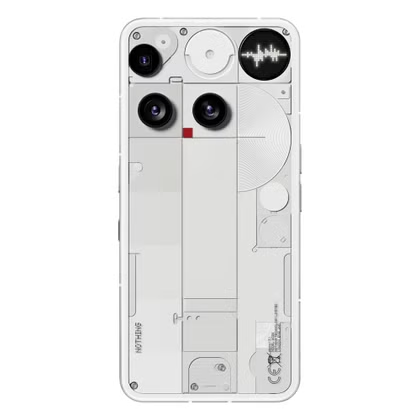
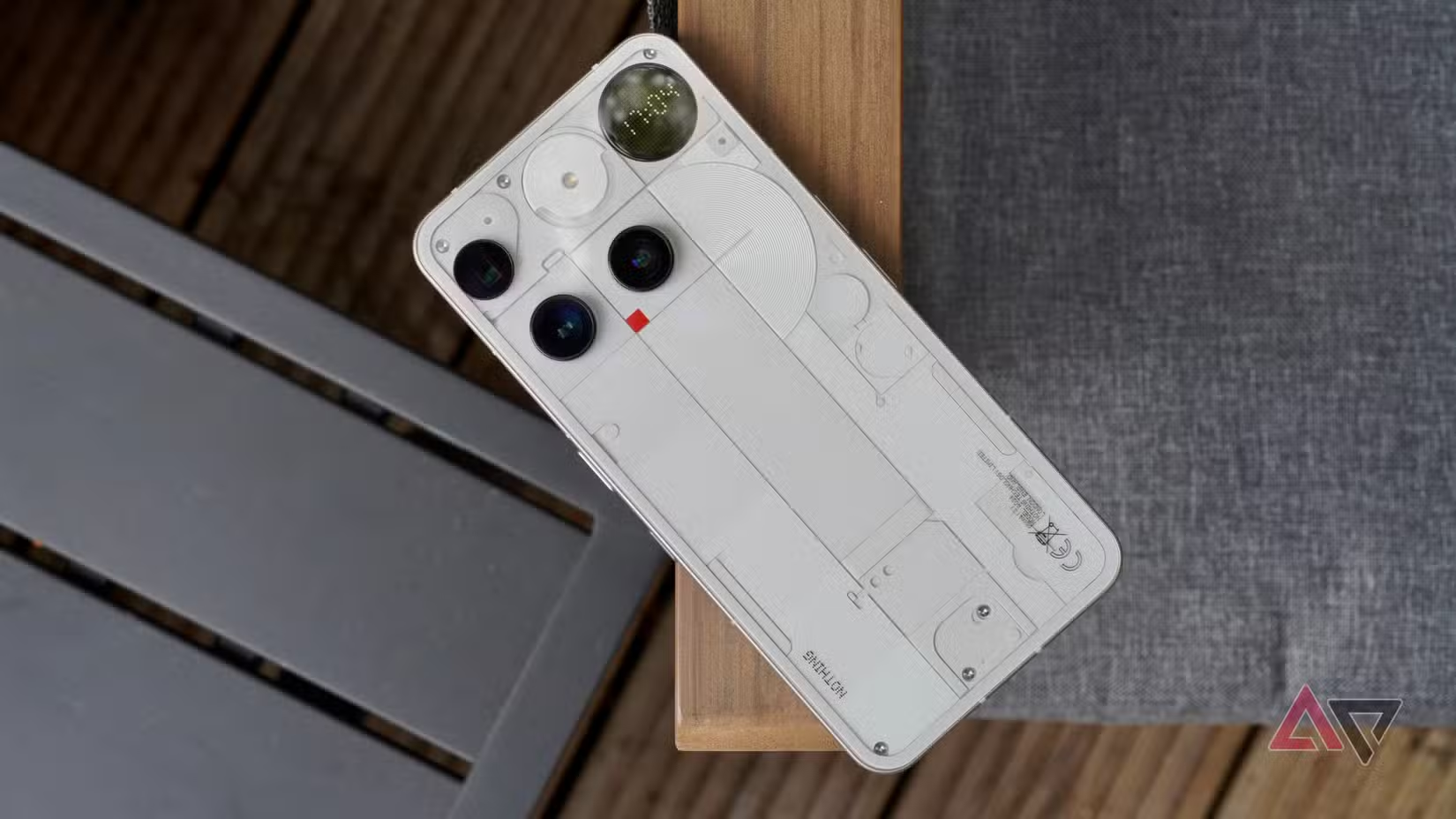
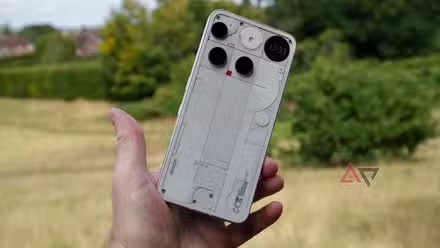
Nothing Phone (3) is the first “true flagship” from the London-based brand. It comes with a 6.67-inch OLED display, a Snapdragon 8s Gen 4 processor, triple 50MP rear cameras, and a 5500mAh battery. It retains Nothing’s transparent design language and comes with an upgraded Glyph Matrix.
- Social media-friendly camera
- Glyph Matrix is a simple gimmick
- A refreshingly different design
- Average performance
- Sometimes overheats while gaming or doing heavy tasks
If you’re looking for a phone that breaks the mold of Samsung, Google, and even OnePlus’ offerings, look no further than Nothing’s premium lineup.
The Nothing Phone 3 is quirky, eccentric, but also a bit odd. The design is different, and the software is a bit of an acquired taste.
You can’t be disappointed with the phone’s performance. It’s powered by a Snapdragon 8 Elite chipset with 12 or 16GB of RAM. It absolutely chews through anything I throw at it.
But even with the phone being unique, that’s not necessarily a bad thing. It’s still a really solid phone without being overly expensive.
The Phone 3 still delivers a solid performance. It is powered by the Qualcomm Snapdragon 8S Gen 4, has 12GB of RAM (16GB on other models), and a 5,150mAh battery.
It’s not as advanced as the newest flagships, but it can compare to last year’s performance from Google, Samsung, and OnePlus.
The cameras are good enough for everyday use, but smartphone photography enthusiasts won’t love them, as they don’t do anything special.
But aside from the actual specs and shots taken, the experience is fun. There’s an array of filters to choose from and a few fun tweaks you can do in Nothing’s Gallery.
This is clearly a phone made to send pictures on the fly to post on your social media.
If you’re already familiar with this brand of Android smartphones, you know that the Nothing Phone lineup isn’t being sold for having the highest specs.
It’s the quirky, unique design and the software that make it stand out. Nothing looks flaunting its signature transparent back panel, revealing all the internal components, plus the Glyph Matrix embedded in the small circular screen.
Nothing Phone 3: Eccentric, quirky, and unlike anything else
But does it make the heart flutter?
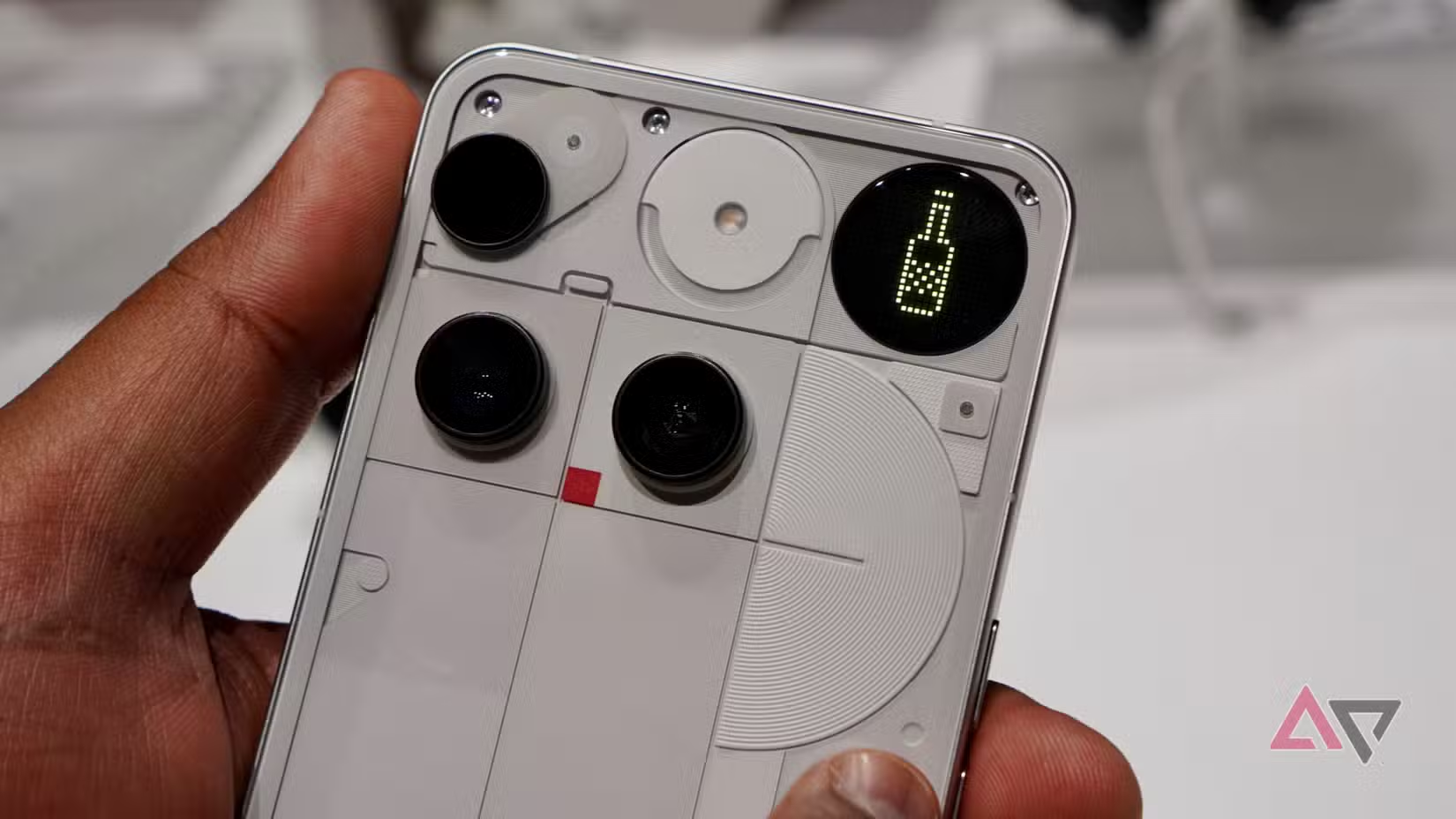
The Glyph Matrix replaces the old Glyph Lights found on older Nothing Phones.
The Glyph Matrix is no longer just for decoration. It shows useful stats like timers, battery percentages, and custom notification symbols. Our reviewer even mentions discovering a mini-game, spin the bottle, while testing.
Nothing’s software, Nothing OS, is essential for controlling and customizing the Glyph Matrix. Still, you can appreciate its unconventional aesthetic. You’ll find monochromatic themes and unique icon packs, along with some custom dot-matrix fonts.
The software is still pretty clean and minimalist, nothing compared to Samsung’s One UI, which is sometimes filled with bloat.
The support isn’t too bad; the company at least promises five years of Android OS updates and seven years of security patches for the Nothing Phone 3. It’s not as good as Samsung’s and Google’s, but it’s still pretty solid.
But all in all, if you’re in the market for something a little different and a bit on the expensive side, you’ll feel pretty good about picking up the Nothing Phone 3.
- SoC
-
Samsung Exynos 1330
- Display type
-
AMOLED
- Display dimensions
-
6.7 inches
- RAM
-
4GB
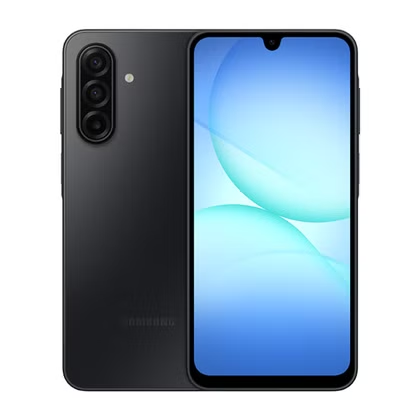
The Samsung Galaxy A17 features a 6.7-inch Super AMOLED display and a 1080p resolution. It’s powered by an Exynos 1330 chipset and 4GB of RAM, with 128GB of storage. It includes a 50MP primary sensor, a 5MP ultrawide lens, and a 2MP macro camera. It also has a 5,000mAh battery.
- Excellent display
- Six years of software support
- Very affordable
- Slow and laggy at points
- Only 4GB of RAM
It’s not perfect, but the Samsung Galaxy A17 is hard to beat for only $200.
Samsung improved the screen on this year’s device. It still features a 6.7-inch OLED screen with 1080p resolution and a 90Hz refresh rate, the same as its predecessor.
The main difference is the display protection. The Galaxy A17 uses Gorilla Glass Victus instead of Gorilla Glass 5, which is better at protecting against drops and scratches.
Even if there haven’t been significant changes to the display, the Galaxy A17 still offers a high-quality display that’s very impressive for a budget device.
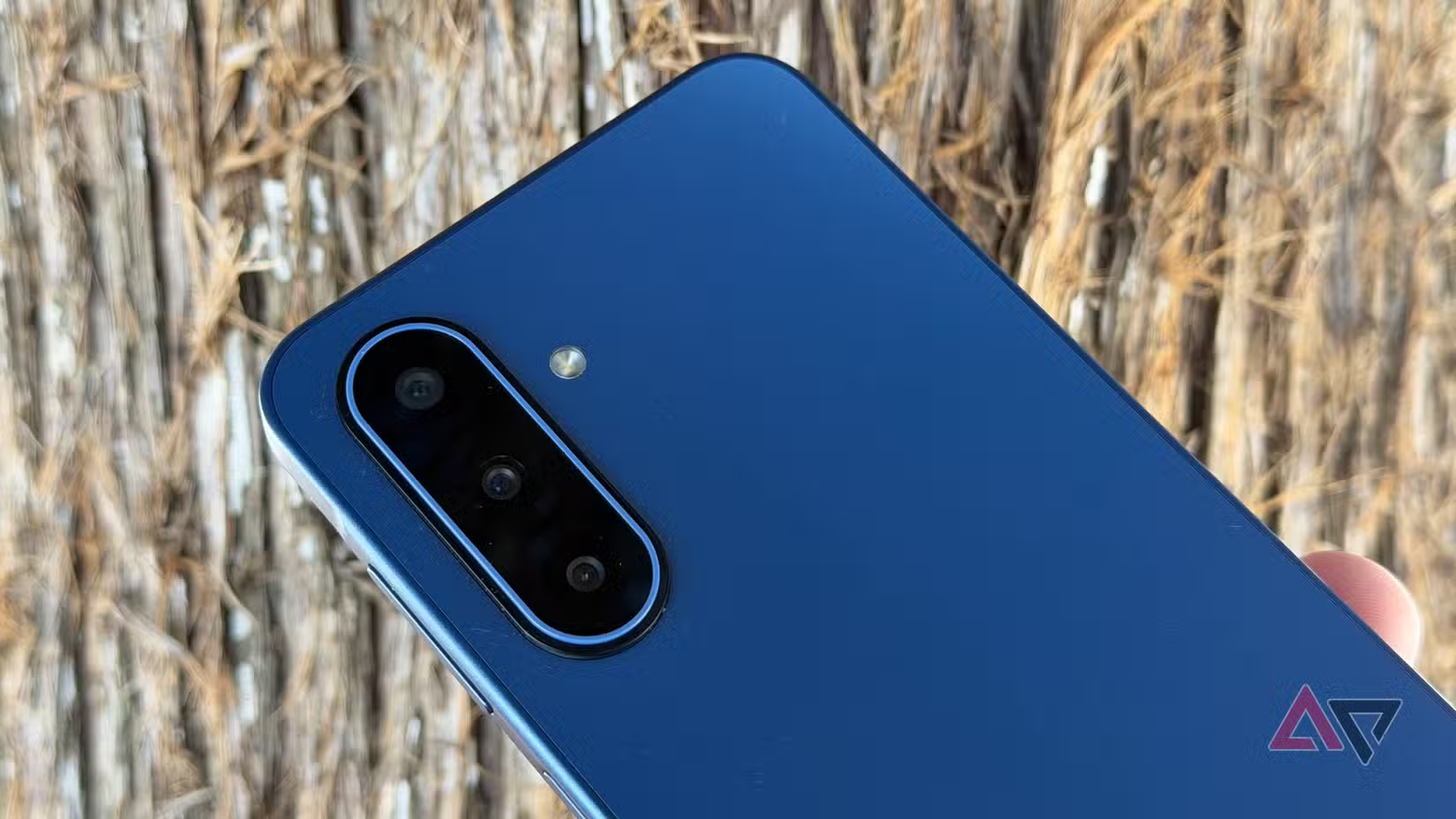
Performance is in line with what you’d expect from a budget phone. Its Exynos 1330 chipset handles basic tasks effectively, but if you attempt to play a more intensive mobile game, you’ll notice slowdowns.
RAM still takes a hit; 4GB of RAM is still too little and remains the standard for these bargain-deal smartphones.
Though Samsung has a virtual RAM feature that somewhat circumvents this, as you shouldn’t need that much if you’re only using this phone to make calls or do light browsing.
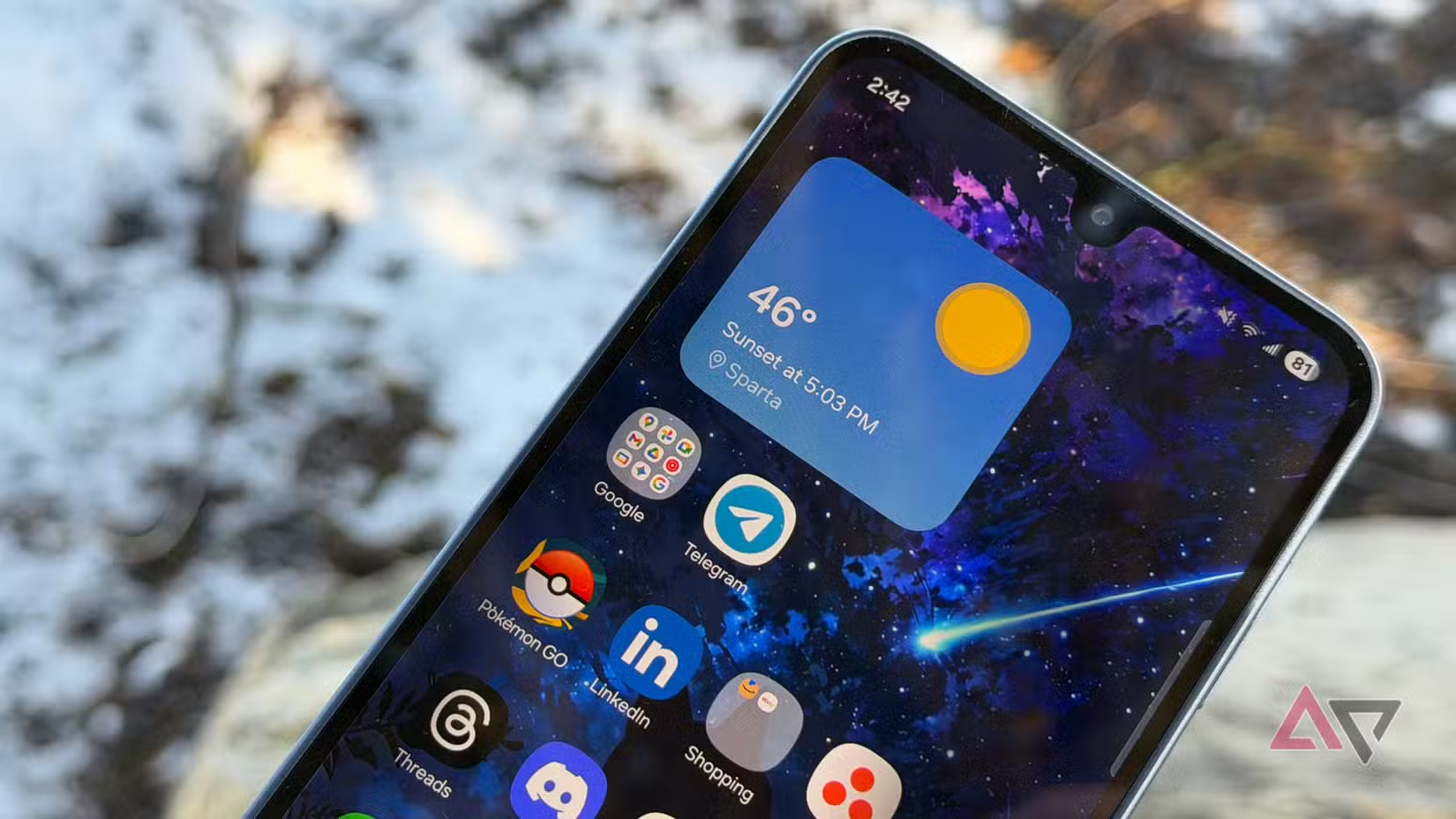
What makes the Galaxy A17 particularly impressive is the promised software support. Like the Galaxy A16, Samsung also gave the green light to six years of software updates for the Galaxy A17.
The phone’s 5,000mAh battery life is pretty ample, and photos taken in good lighting from its 50MP primary sensor aren’t awful. If your budget is $200, it’s hard to beat the Galaxy A17.
What are the most important things to look for in an Android phone?
It’s easy to become overwhelmed by all the specifications and features thrown around in a phone’s product listing or reviews.
Ultrasonic fingerprint sensors, 100x zoom cameras, S Pen stylus support, UWB, and the list goes on, but what do you actually need, and what’s just icing on the proverbial cake?
There are four key features you should look at in a new phone — after you decide on your budget:
- Camera
- Screen
- Battery
- Software and updates
Camera
While the camera might not be the most important feature for some buyers, it’s a good indicator of overall speed, performance, and quality.
For example, if a review mentions that the camera takes too long to open or too long between shots when snapping multiple photos in succession, that’s a hint that the phone’s long-term performance might be more sluggish than what initial reviews indicate.
Screen
Most phones today come with screens in the 6.4-inch to 6.8-inch range. However, aspect ratio plays a role in how wide, narrow, tall, or short a phone feels in your hand.
If you prefer more petite devices, be prepared for a difficult search if you want to go smaller than the 6.3-inch Samsung Galaxy S26.
There are three other screen features to consider: curved screens, high refresh rates, and maximum brightness.
Curved screens can look lovely, but tempered glass screen protectors often fit them more poorly, and they can be harder to grip without accidental touches.
Meanwhile, when it comes to refresh rates, the higher, the better. 60Hz is the classic rate, but 90Hz and 120Hz are becoming more common, even among midrange and budget phones like the Samsung Galaxy A17.
You’ll get a smoother experience with a high refresh rate display, but often at the cost of battery life.
Finally, make sure you pay attention to your phone’s screen brightness if you spend time outdoors. If a screen doesn’t get very bright, it’ll be hard to read outside.
Battery
The brighter your screen, the more power it consumes. However, a battery is more than just a number on a spec sheet. Read the reviews and see how that battery performs in actual use in the reviews.
While a good power bank or a fast phone charger can somewhat offset a smaller battery, nothing can replace getting a phone with a proper battery life from the start.
Software and updates
When it comes to software, you’ll want to look for features you care about, crossed with a reliable update schedule.
Some users can’t stand how One UI behaves towards most third-party launchers or how over-stuffed Samsung’s apps and features are, flocking instead to the Pixel 10 series and its cleaner design.
Others prefer how flexible One UI can be compared to the competition, especially with add-ons like Good Lock.
When looking at a phone’s promised updates, it’s important to remember a few things. Platform updates are updates to the features and Android level of your phone. The Galaxy S26 and Pixel 10 series will get seven years of OS upgrades and security patches.
Picking the best Android smartphone
Android phones have received various quality-of-life improvements over the years, such as better battery life, faster, more frequent software and security updates, more features, and improved craftsmanship for a better overall feel and durability.
Taken together, it’s easy to see why some phones have come close to costing over $1,000, though other factors are at play.
With all that said, our choice for the best Android smartphone goes to the Google Pixel 10 Pro XL, the best combination of performance, features, and software support.
The Pixel 10 Pro XL has a high-quality camera setup on both the front and back, long battery life, many advanced Pixel and AI features, and a range of accessories to further personalize your experience.
The Samsung Galaxy S26 Ultra is another excellent choice, offering even more personalization and customization options, the same excellent level of software and security, and one of the best-performing camera setups on the market.
The Galaxy S26 Ultra is also the best phone for those who like to doodle and make notes, thanks to its built-in S Pen stylus.
Last but not least, the Google Pixel 10a is a true flagship killer, offering advanced features from Google’s Pro-branded high-end flagships. It’s remarkably affordable and features a fast Google Tensor G4 chipset, a responsive display, and all the usual features you’d expect from a highly capable device.
9/10
- SoC
-
Google Tensor G5
- Display type
-
Super Actua
- Display dimensions
-
6.8-inches
In a very tight competition, the Google Pixel 10 Pro LX takes our top spot for best overall Android smartphone. It has great performance, fantastic battery life, and an excellent camera that reliably takes great photos. It’s a big phone, as it sports a 6.8-inch Super Actua display refreshing at 120Hz. Google included 16GB of RAM, right off the bat, and added 256GB for starting storage.
- Modern and durable design
- Great software support
- Excellent camera
- Expensive compared to the other strong Pixel 10 options
- New AI features were not that impressive
VIA: www.androidpolice.com